Kitchen Fire Suppression System in Mumbai
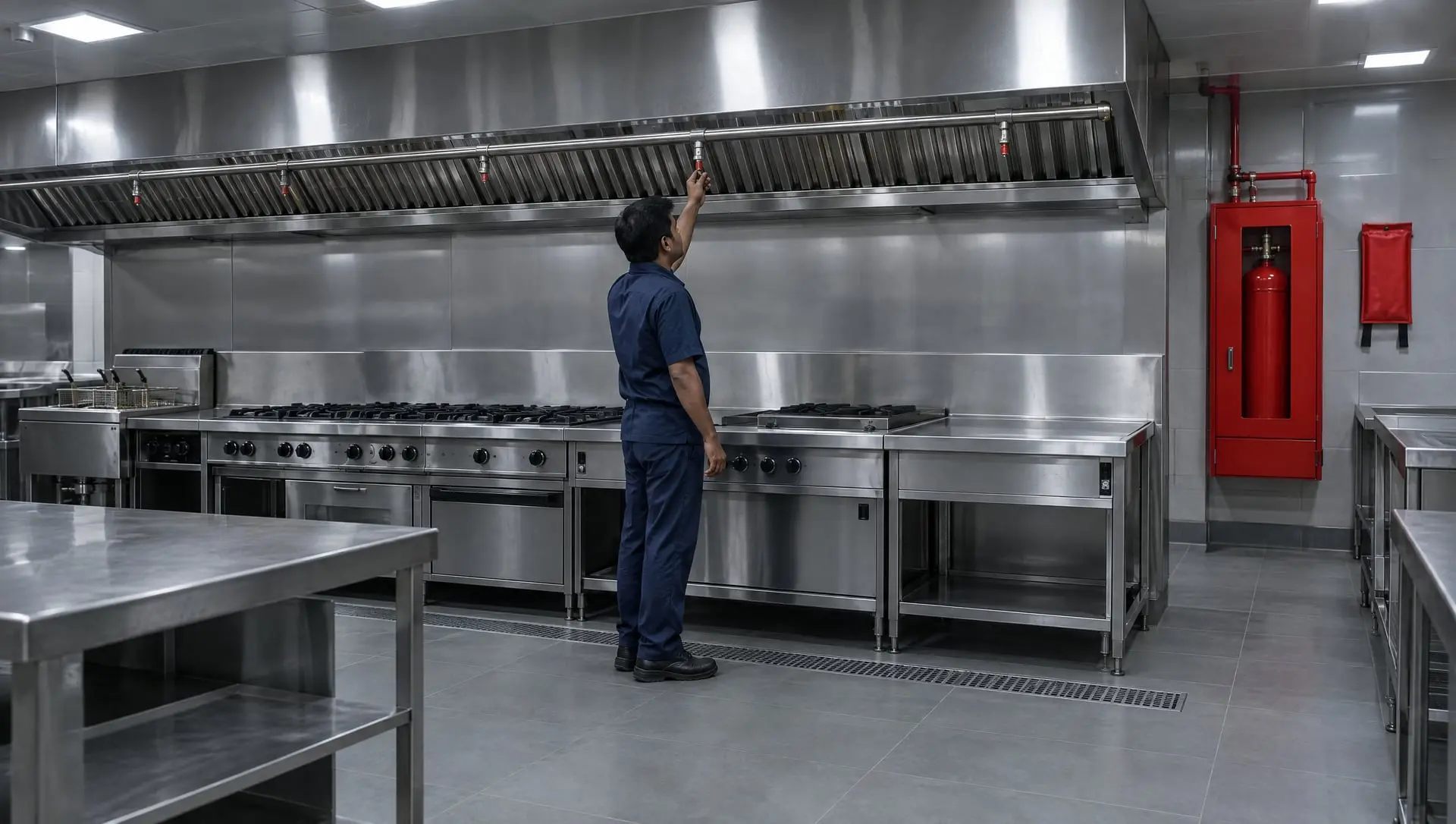
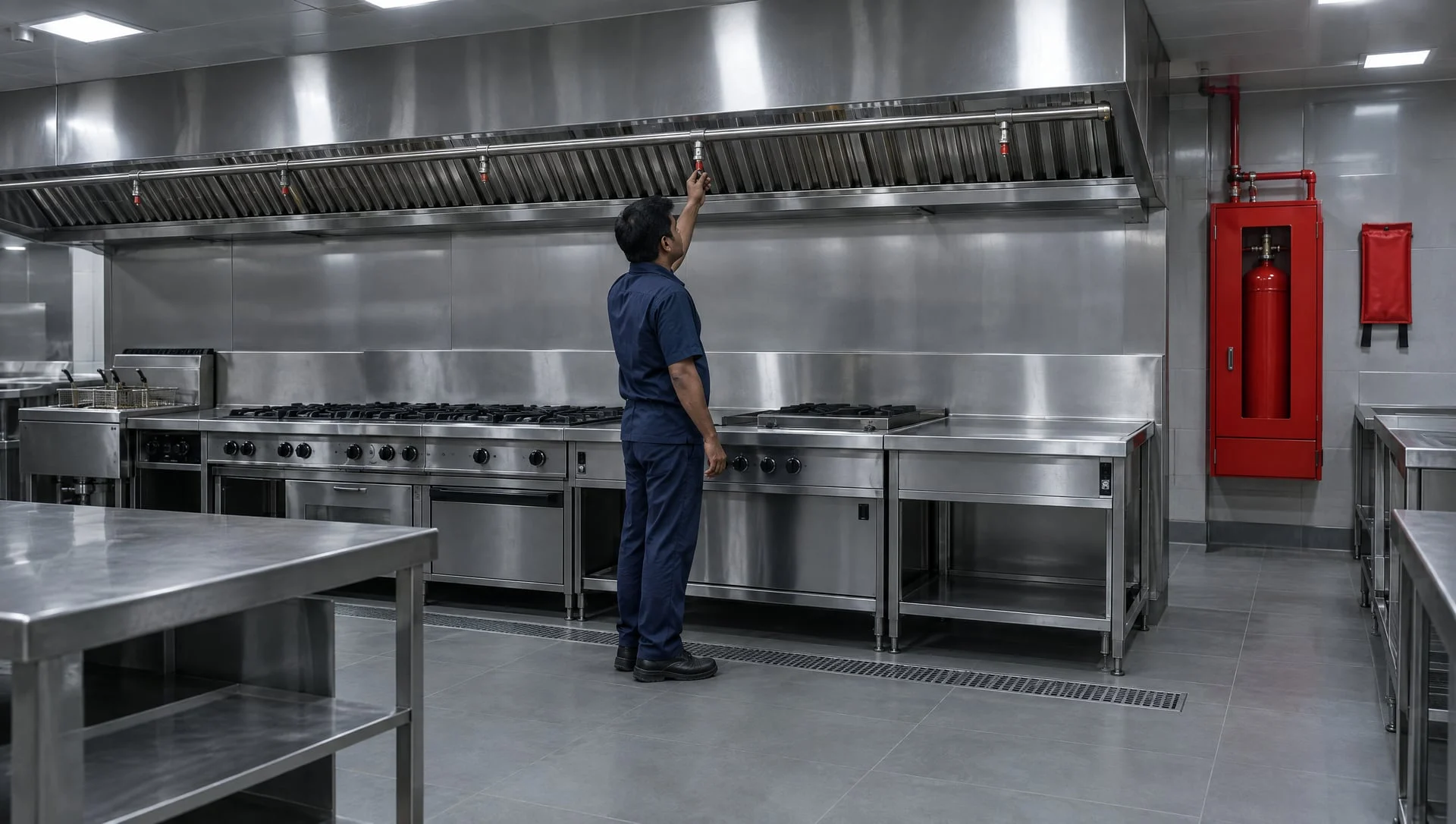
Cease Fire & Electrical Services LLP installs and maintains the kitchen fire suppression system for hotels, restaurants, hospital kitchens, canteens and cloud kitchens in Mumbai. A kitchen fire suppression system sits in the hood above the cooking line and, when a fire starts, sprays a wet chemical agent onto the appliances, into the hood and into the duct while cutting off the gas or electric supply. The systems we supply are UL 300 listed and follow NFPA 17A and NFPA 96.
Why kitchens need their own system
Cooking oil and grease fires burn very hot and can flash back if water is thrown on them. Grease also builds up inside hoods and ducts, so a fire at one fryer can spread quickly along the exhaust. A hood system detects the fire at the cooking line, knocks it down with a wet chemical agent made for cooking oil fires, and shuts off the fuel so the fire cannot restart.
How a kitchen hood system works
- Detection: fusible links in the hood, held in place by a cable under tension, separate at a set temperature when a fire heats them.
- Release: the cable releases a spring-loaded mechanical release module, which opens the agent cylinder. A manual pull station lets staff release it by hand.
- Discharge: the wet chemical agent, a potassium-based liquid made for cooking oil and fat fires, sprays through nozzles over the appliances, the hood plenum and the duct.
- Fuel shut-off: the system cuts the gas or electric supply to the cooking appliances, so the fire cannot re-ignite.
- The agent forms a soapy layer on hot oil that cools it and seals it off from the air, and it is easy to clean up after a discharge.
Components
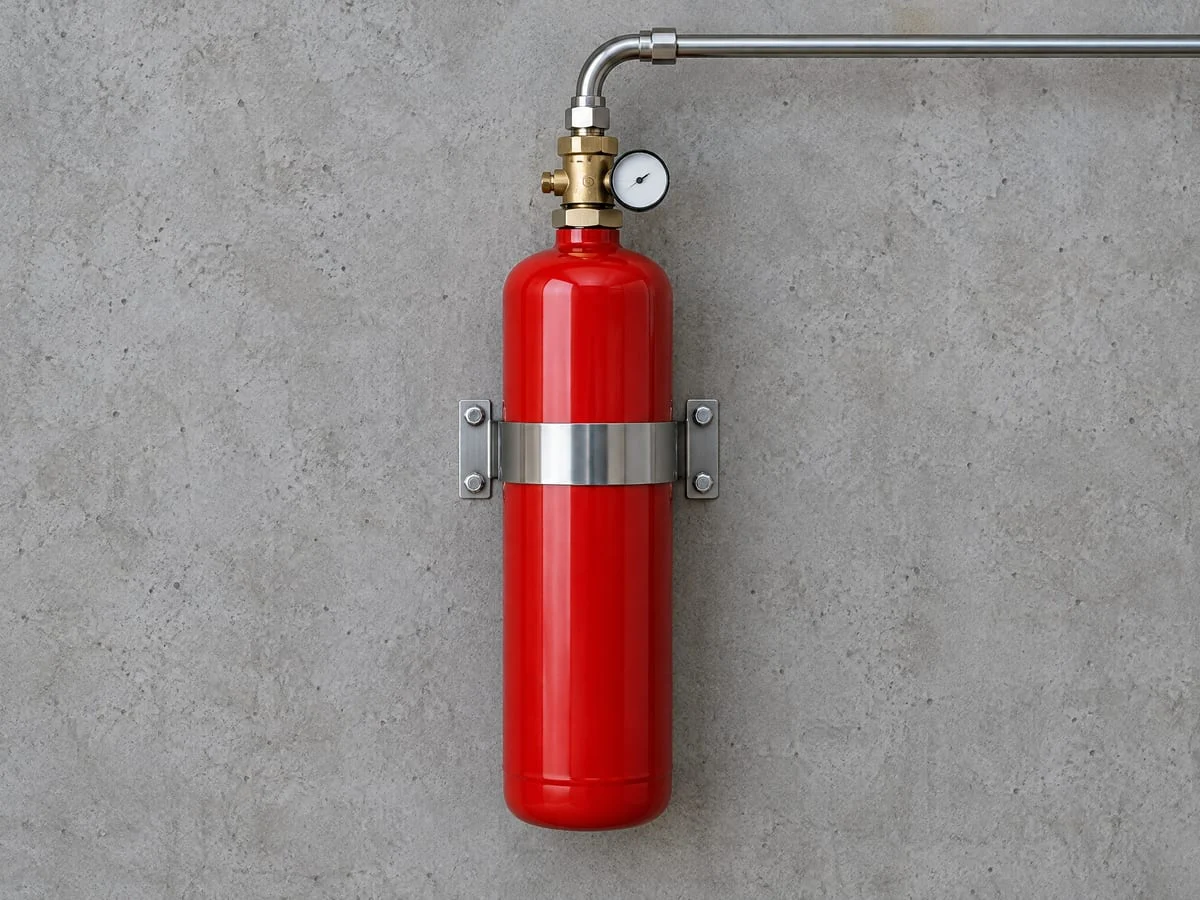
Wet chemical agent cylinder
Stores the liquid agent under pressure; sizes from 6 to 30 litres across the ranges we supply, to suit the hood
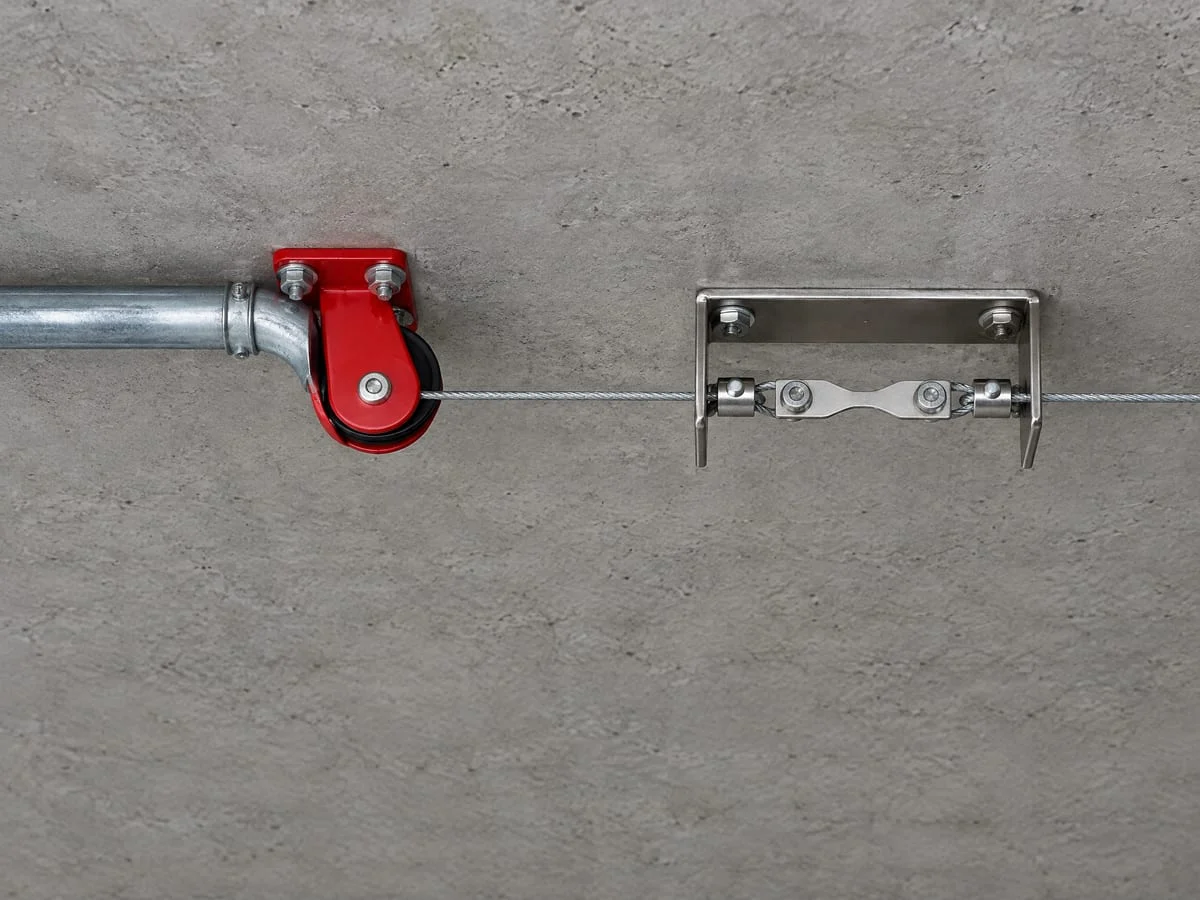
Fusible link detection line
Senses heat above the appliances and in the duct
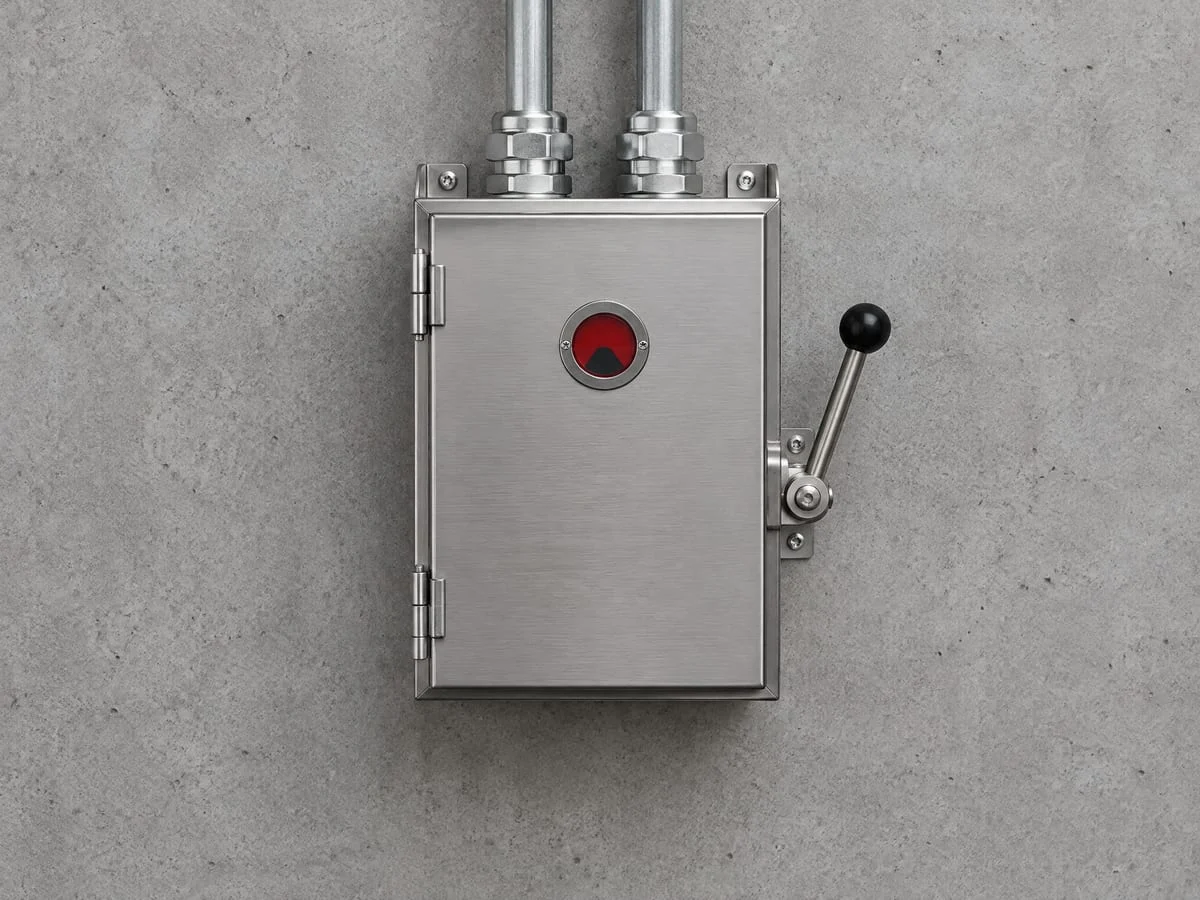
Mechanical release module
Opens the cylinder when a link separates or the pull station is used
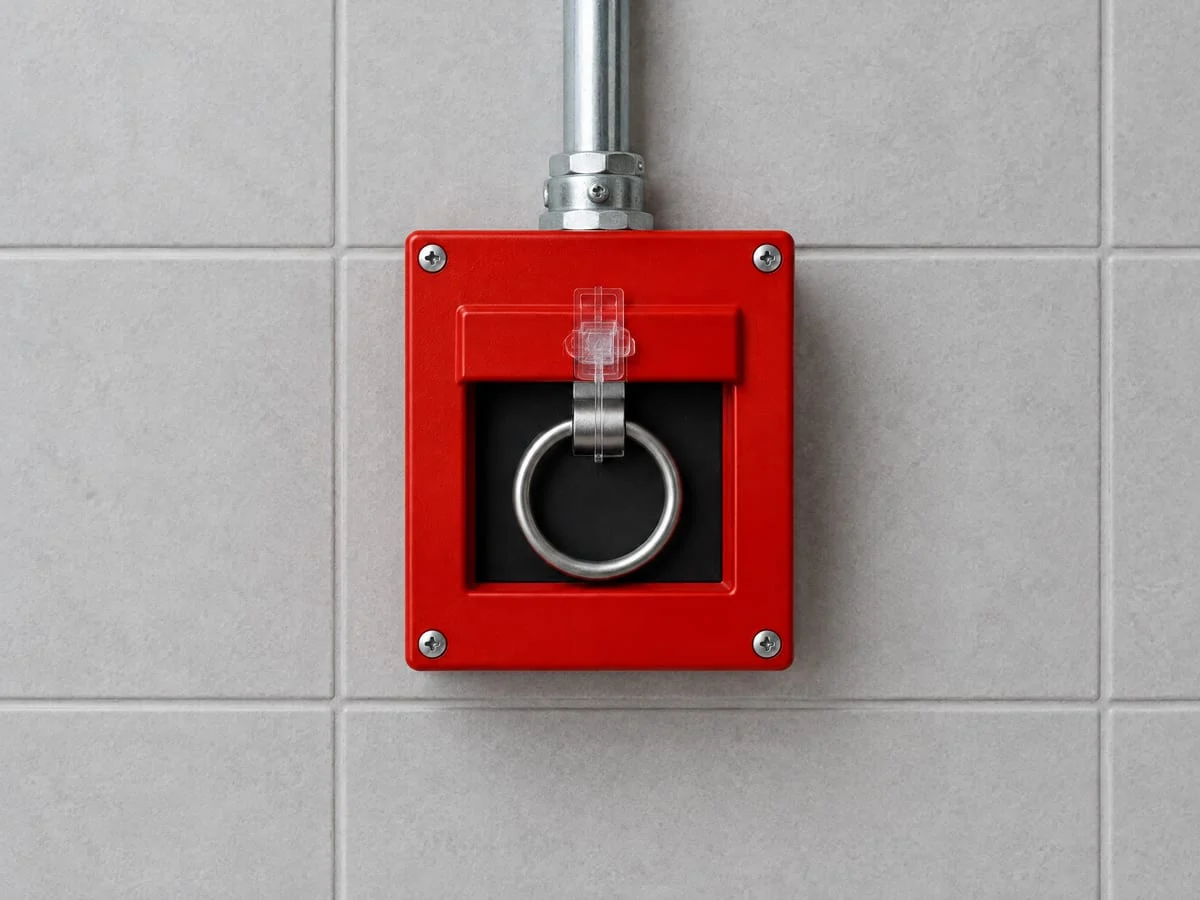
Manual pull station
Lets staff release the system by hand from a safe exit route
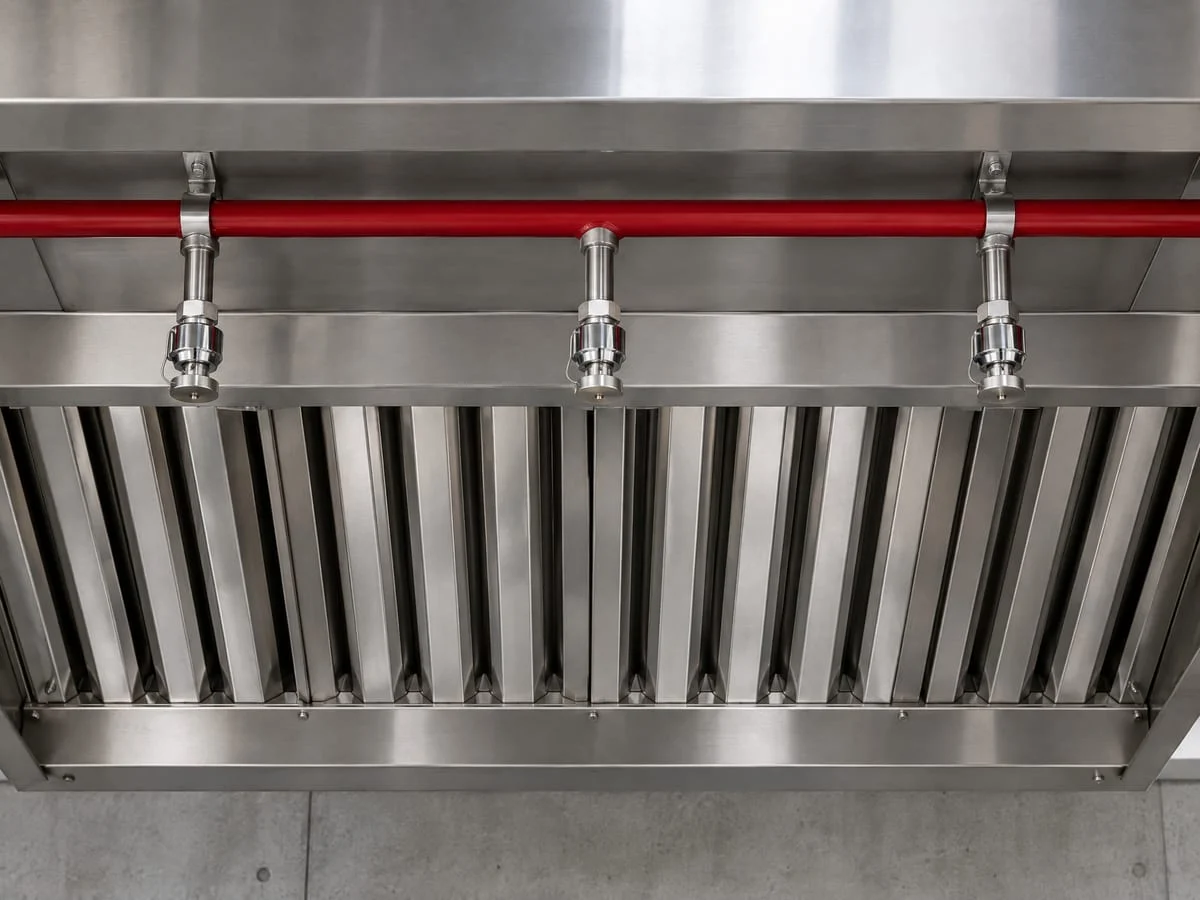
Appliance, plenum and duct nozzles
Spread the agent where fires start and spread
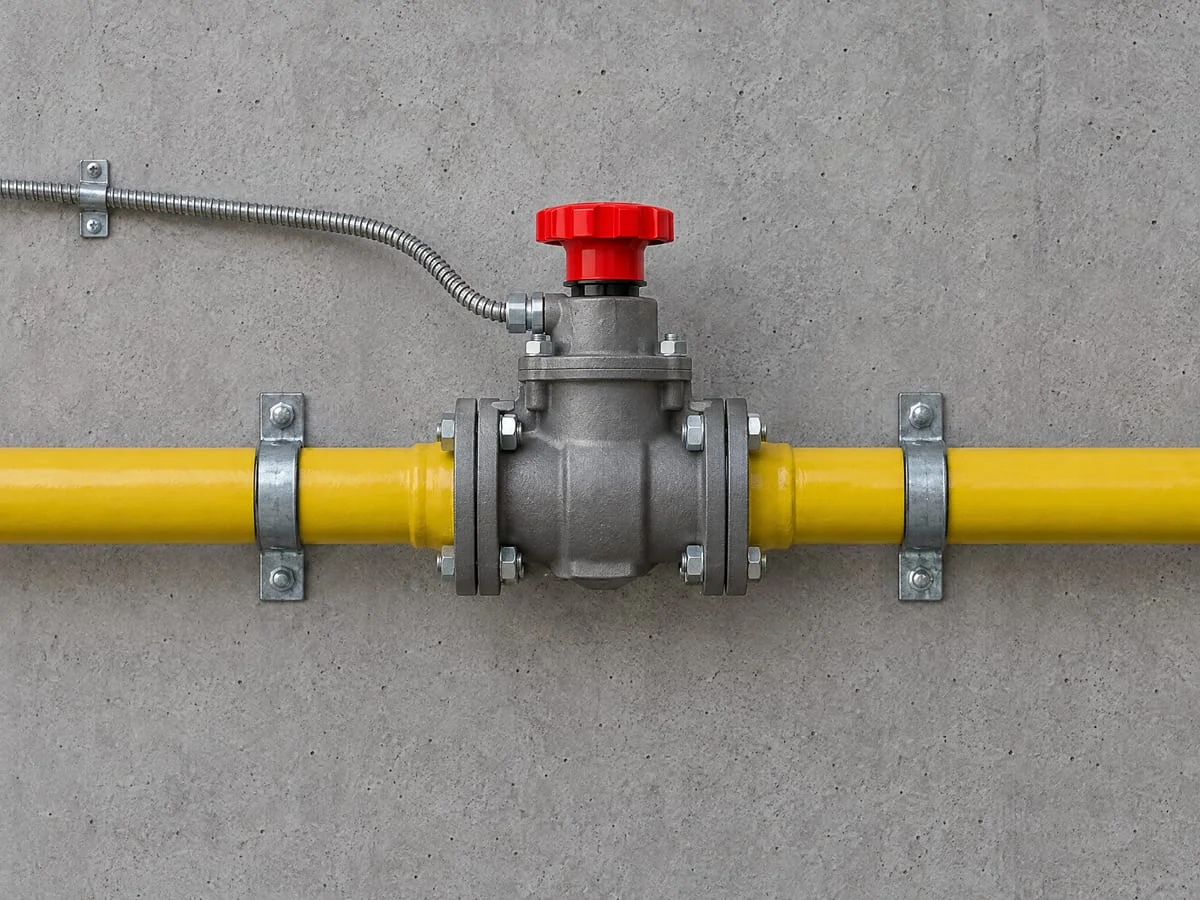
Gas shut-off valve or electric shut-off
Cuts the fuel supply when the system operates
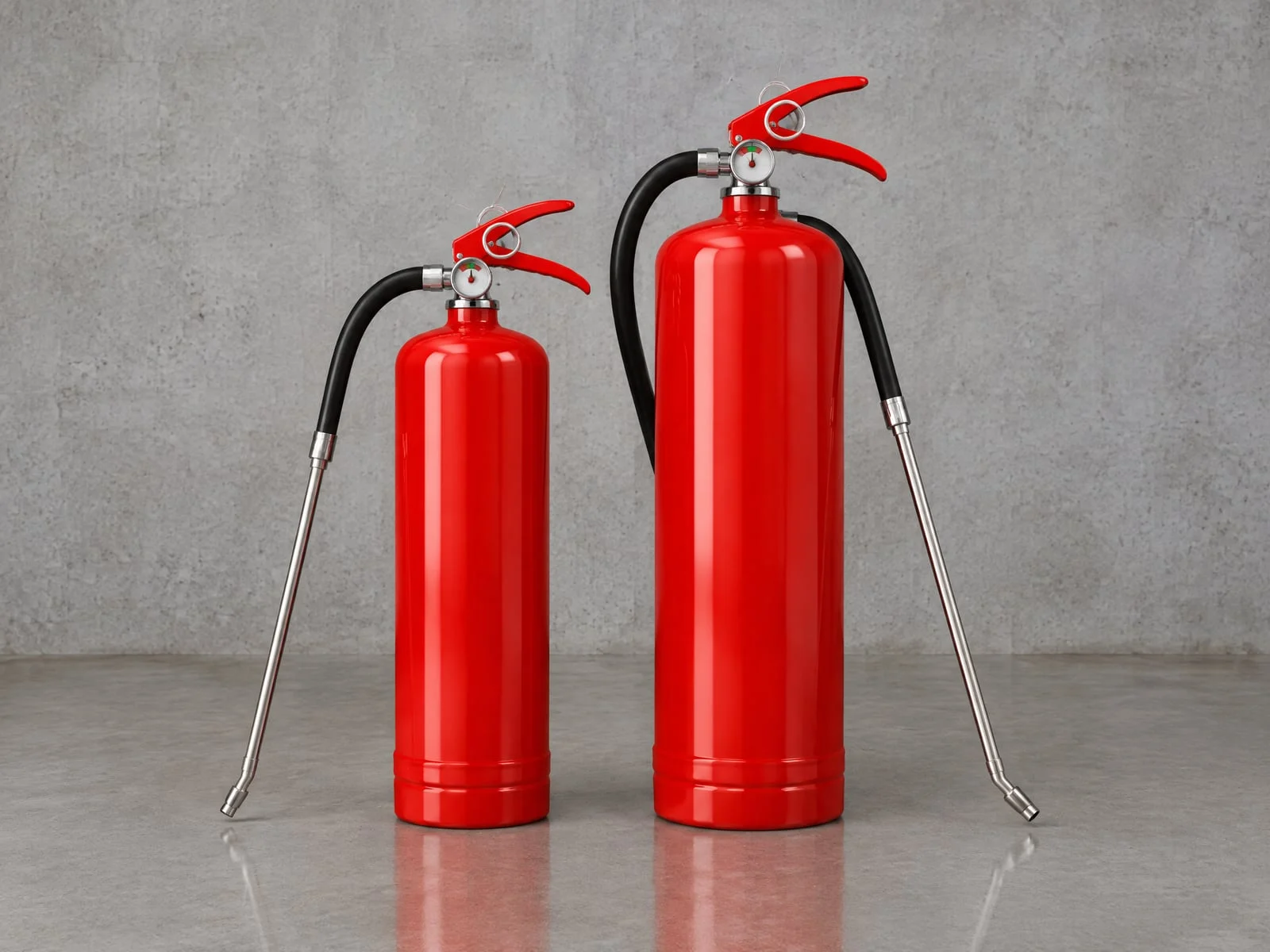
We can also supply a K-class kitchen fire extinguisher near the cooking line as a back-up for small fires.
Where kitchen systems are used
- Hotels and restaurants
- Full hood system over fryers, ranges, tandoors, woks and grills
- Hospital and school kitchens
- Hood system with gas shut-off, linked to the building fire alarm where required
- Industrial canteens
- Large hoods with several cylinders and duct protection
- Cloud kitchens and food courts
- Separate systems for each tenant's hood
Standards
The kitchen systems we supply are UL 300 listed (fire extinguishing systems for restaurant cooking areas) and follow NFPA 17A, the standard for wet chemical extinguishing systems, and NFPA 96, the standard for ventilation control and fire protection of commercial cooking operations. We size the system from the hood length, the appliances under it and the duct.
Our process
Free kitchen survey
We measure the hood and duct and list every appliance and its fuel.
Design
Cylinder size, nozzle positions, detection line and shut-off valve.
Supply and installation
Cylinder, detection, nozzles, pull station and shut-off, installed by our own team with minimum disruption to your kitchen.
Testing and commissioning
Detection and release tested without discharging the agent, shut-off checked, and kitchen staff trained.
Form A
As a licensed agency, we issue Form A for the work, which you submit to the fire brigade.
AMC and Form B
Periodic checks and Form B every January and July.
Hospitality clients
Our clients include Hotel Ambassador and Oberoi. We are a Maharashtra Fire Services Licensed Agency (MFS/LA/RF-93/RD-95), working across Mumbai, Thane, Navi Mumbai and Maharashtra.
See all projects and case studies.
Maintenance and Form B
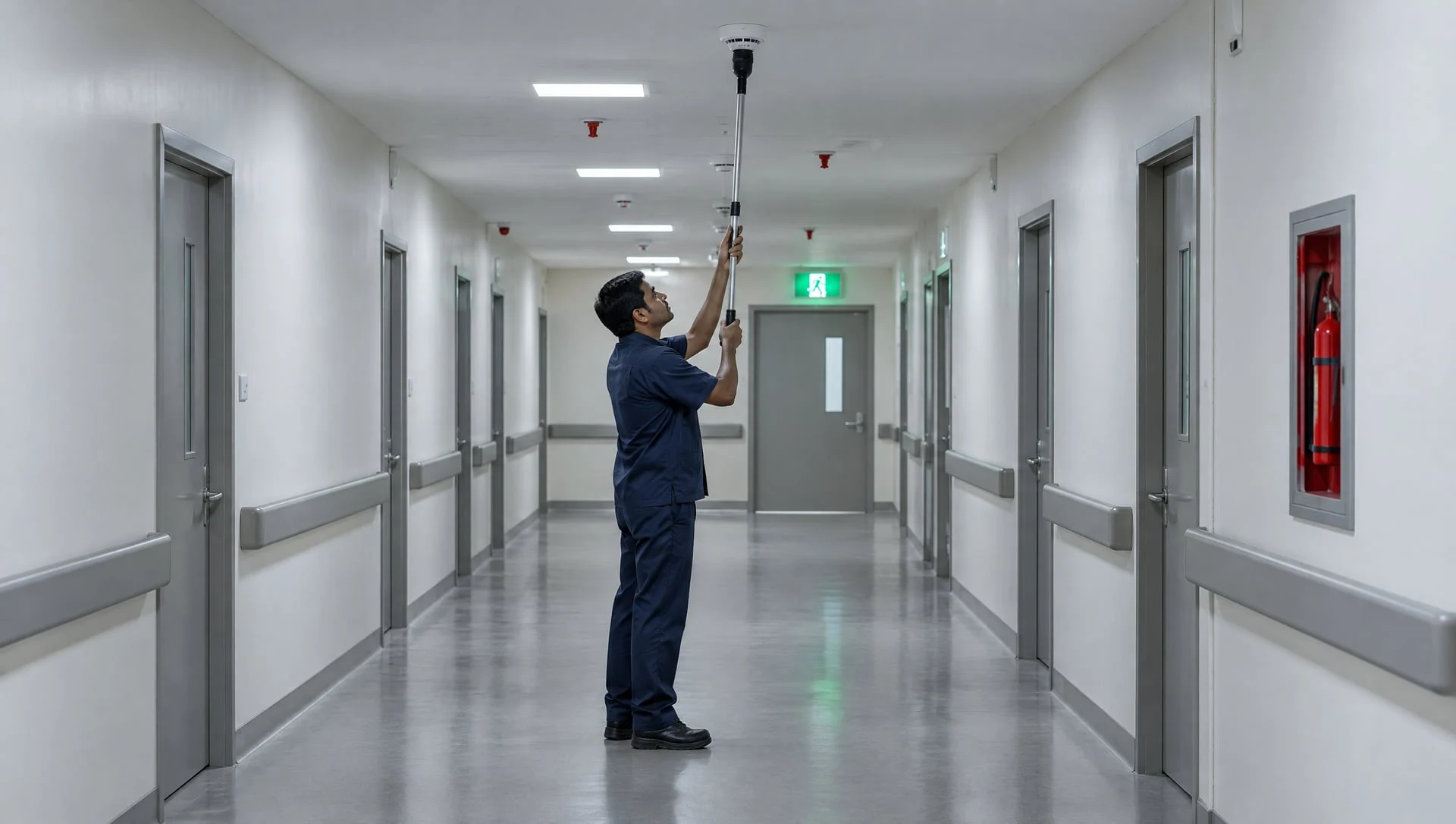
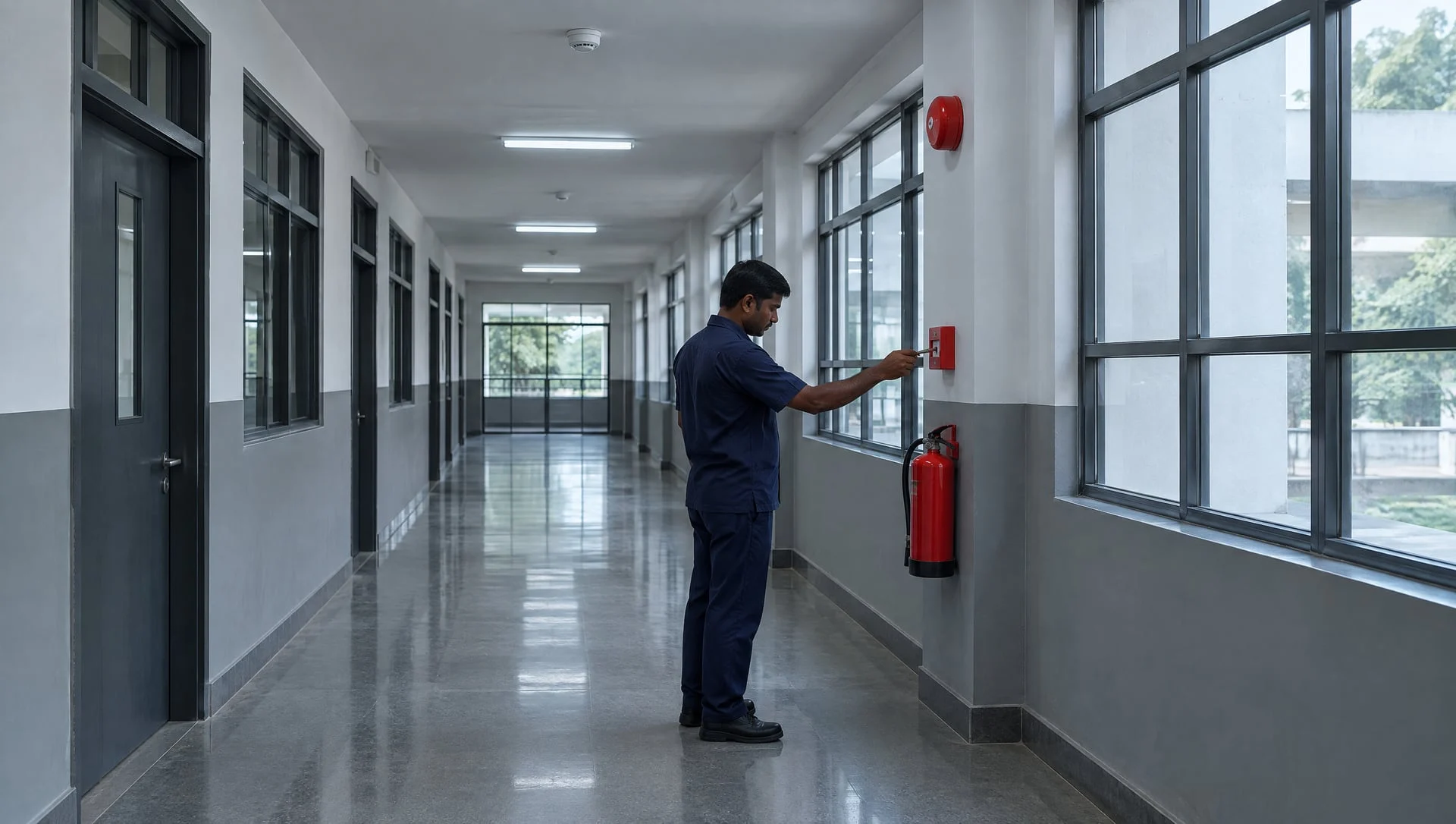
Grease builds up on nozzles and fusible links, and kitchens change appliances often. Under AMC we check the cylinder, replace fusible links as needed, clean and cap nozzles, test the release and shut-off, and tell you when a new appliance needs the system to be changed. A licensed agency must inspect the fire systems and issue Form B every January and July, and we can include this in your AMC.
Why choose Cease Fire
Since 1992
1,500+ projects and the Rashtriya Nirman Ratna Award for Best Government Contractor (2002).
Listed systems
UL 300 listed kitchen systems that follow NFPA 17A and NFPA 96.
Complete kitchen fire safety
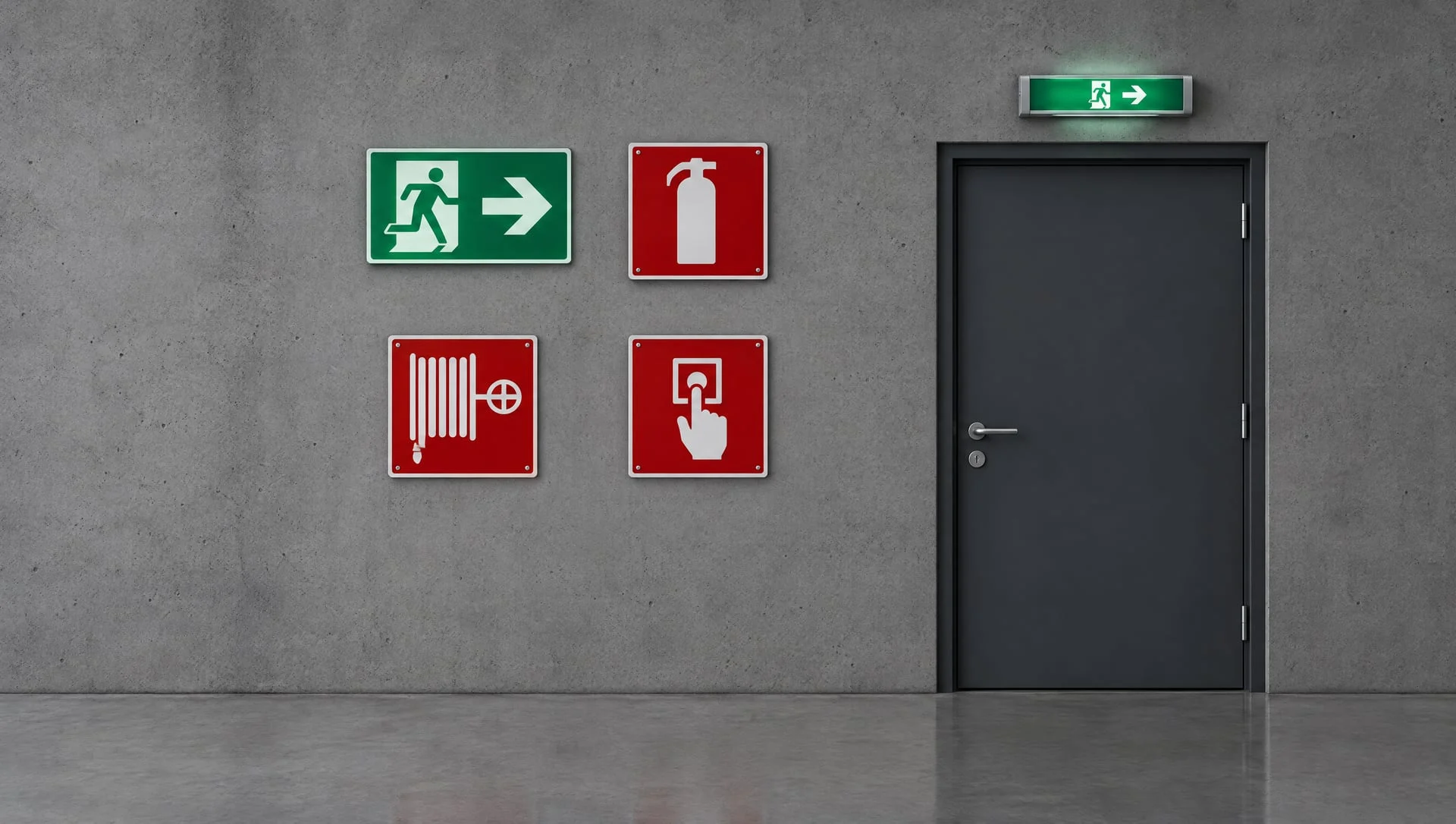
Hood system, K-class extinguisher, fire blanket and signage from one team.
Licensed
We issue Form A and Form B ourselves.

Book a free kitchen survey
Send your hood length, the appliances under it and your location, or book a visit. We will survey the kitchen and send a clear proposal.
Frequently asked questions
What is a kitchen fire suppression system?
It is a fixed system in a kitchen hood that detects a fire over the cooking line and sprays a wet chemical agent onto the appliances, hood and duct. It also cuts off the gas or electric supply.
How does a kitchen hood suppression system work?
Fusible links in the hood separate in the heat of a fire and trigger a mechanical release. The agent sprays through nozzles and the fuel supply is shut off, or staff can release it with the manual pull station.
Why is water not used on a kitchen fire?
Water on burning cooking oil can make the oil splash and flare up. The wet chemical agent cools the oil and forms a layer that seals it from the air.
Does a kitchen suppression system cut off the gas?
Yes. The system shuts off the gas or electric supply to the appliances under the hood, so the fire cannot restart.
What does UL 300 mean for a kitchen system?
UL 300 is the test standard for fire extinguishing systems that protect restaurant cooking areas. The systems we supply are listed to it.
Is the agent safe to clean up after a discharge?
The agent is water based and is cleaned up with water and detergent. Food exposed to the discharge should be thrown away.
How often should a kitchen suppression system be serviced?
Most kitchens have quarterly checks and an annual service under AMC, with fusible links and nozzles checked for grease. A licensed agency must also inspect the fire systems for Form B every January and July.
What size cylinder does a kitchen hood need?
The ranges we supply run from 6 to 30 litres. We choose the size from the hood length, the appliances under it and the duct run, and confirm it in the proposal.
Do I still need a K-class extinguisher with a hood system?
Yes. The hood system protects the cooking line, while a K-class extinguisher near the exit lets staff tackle a small fire early.
Question not answered here? Call our team, Monday to Saturday, 9 am to 7 pm.
Call +91 9920676281