CO2 Fire Suppression System in Mumbai
Cease Fire & Electrical Services LLP designs, installs and maintains the CO2 fire suppression system for electrical rooms, DG rooms, cable galleries, machinery spaces and other normally unoccupied areas in Mumbai. A CO2 fire suppression system floods a closed room, or covers a single piece of equipment, with carbon dioxide gas that smothers the fire and leaves no residue. Because CO2 at extinguishing levels is dangerous to people, we design every system with warnings, a delay before release and a way to lock it off during maintenance.
How a CO2 system works
Smoke or heat detectors sense a fire and signal the releasing panel. The panel sounds hooters and strobes inside and outside the room and counts down, giving people time to leave. It then opens the CO2 cylinders, and the gas travels through pipework to nozzles that fill the room. CO2 lowers the oxygen level until the fire cannot burn, and it also cools. The system can also be released by hand from outside the room.
Total flooding or local application?
Total flooding
How it worksFills the whole closed room with CO2
Typical useElectrical rooms, DG rooms, cable galleries, record stores and machinery spaces
Local application
How it worksDischarges CO2 directly onto one piece of equipment
Typical usePrinting presses, dip tanks, open machinery and similar single hazards
Where CO2 systems are used
- Electrical and switchgear rooms, transformer and panel rooms
- DG (diesel generator) rooms and pump rooms
- Cable galleries and cable tunnels
- Machinery spaces, turbine and compressor enclosures
- Record stores and archives that are not normally occupied
- For rooms where people work, such as server rooms and control rooms, a clean agent (FM-200 or FK-5-1-12) or an inert gas system is usually the better choice.
Components of a CO2 system
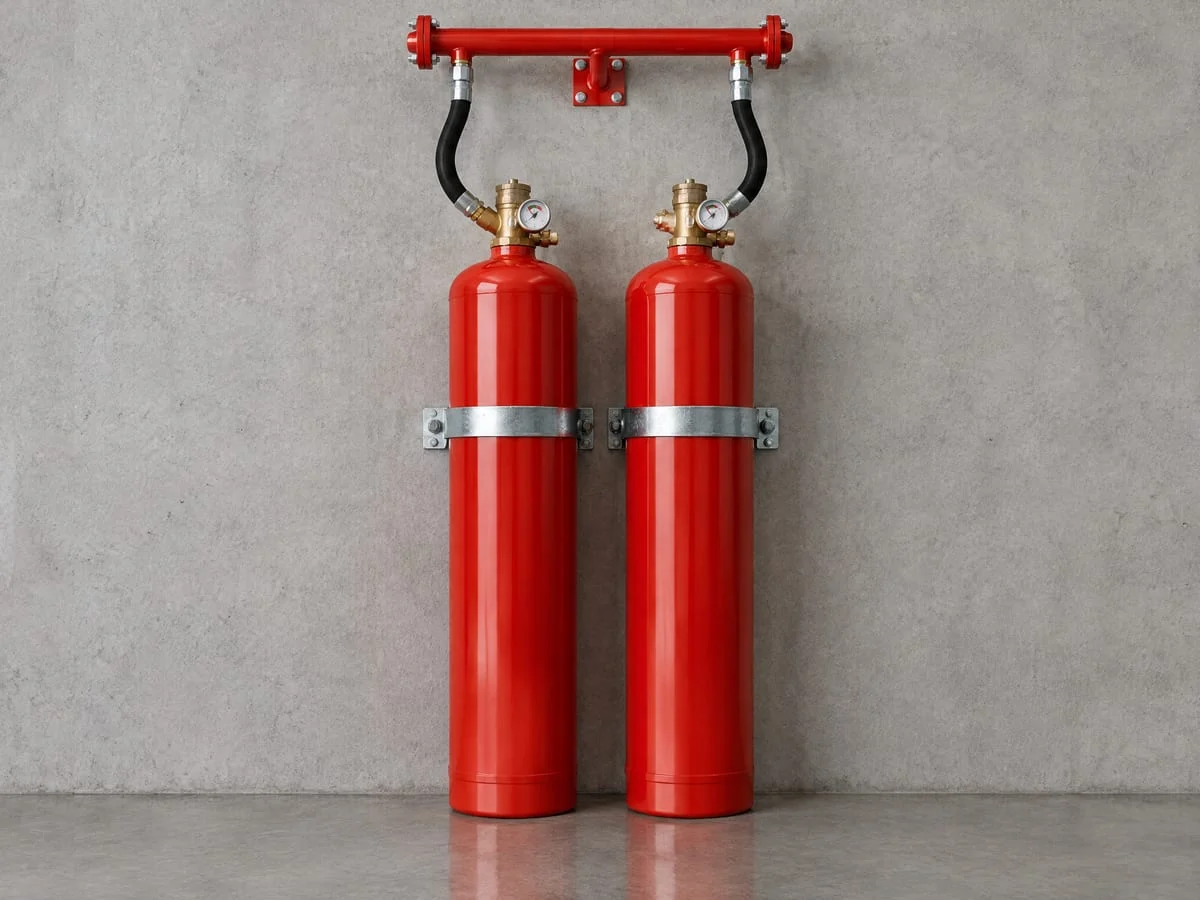
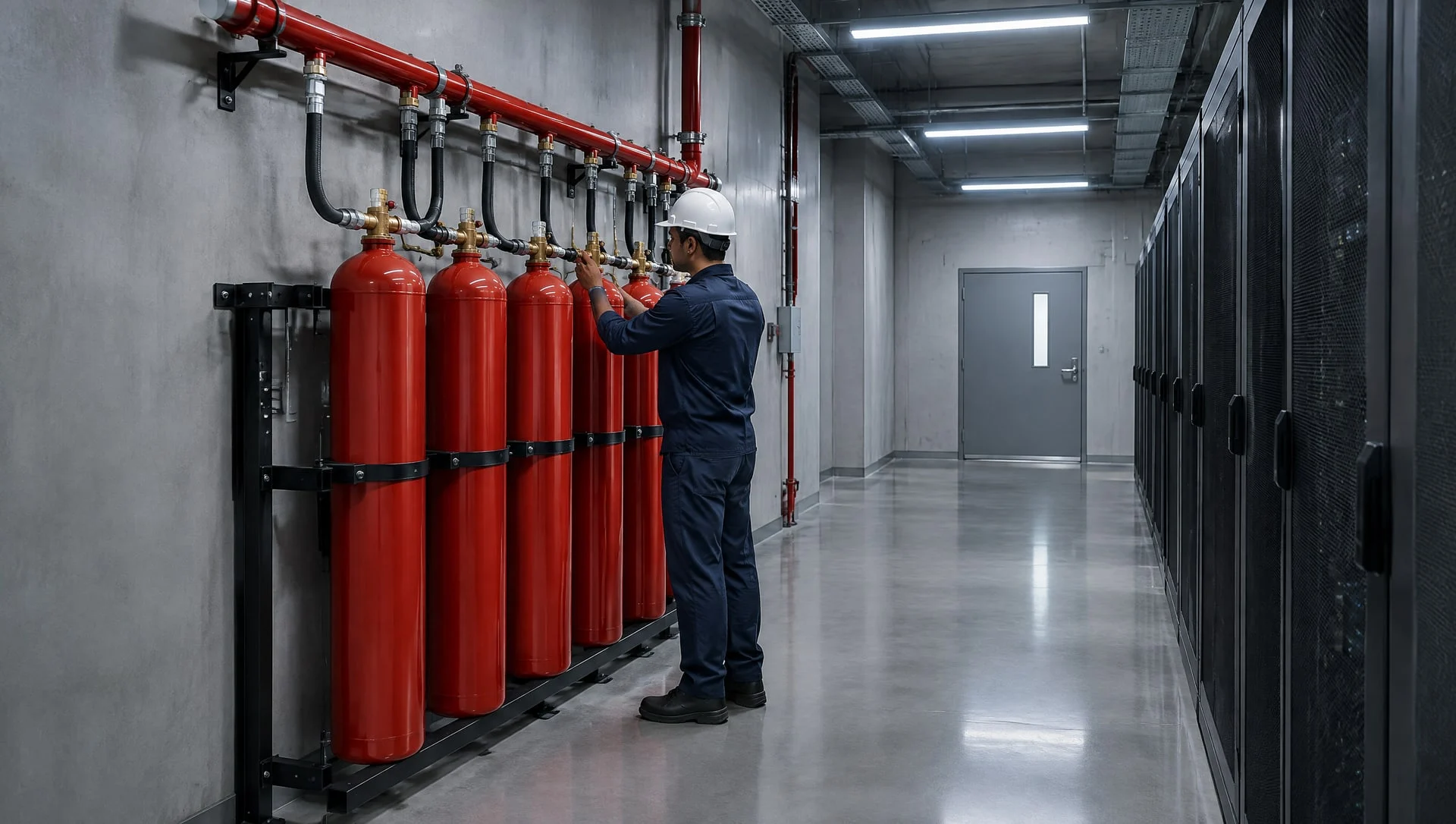
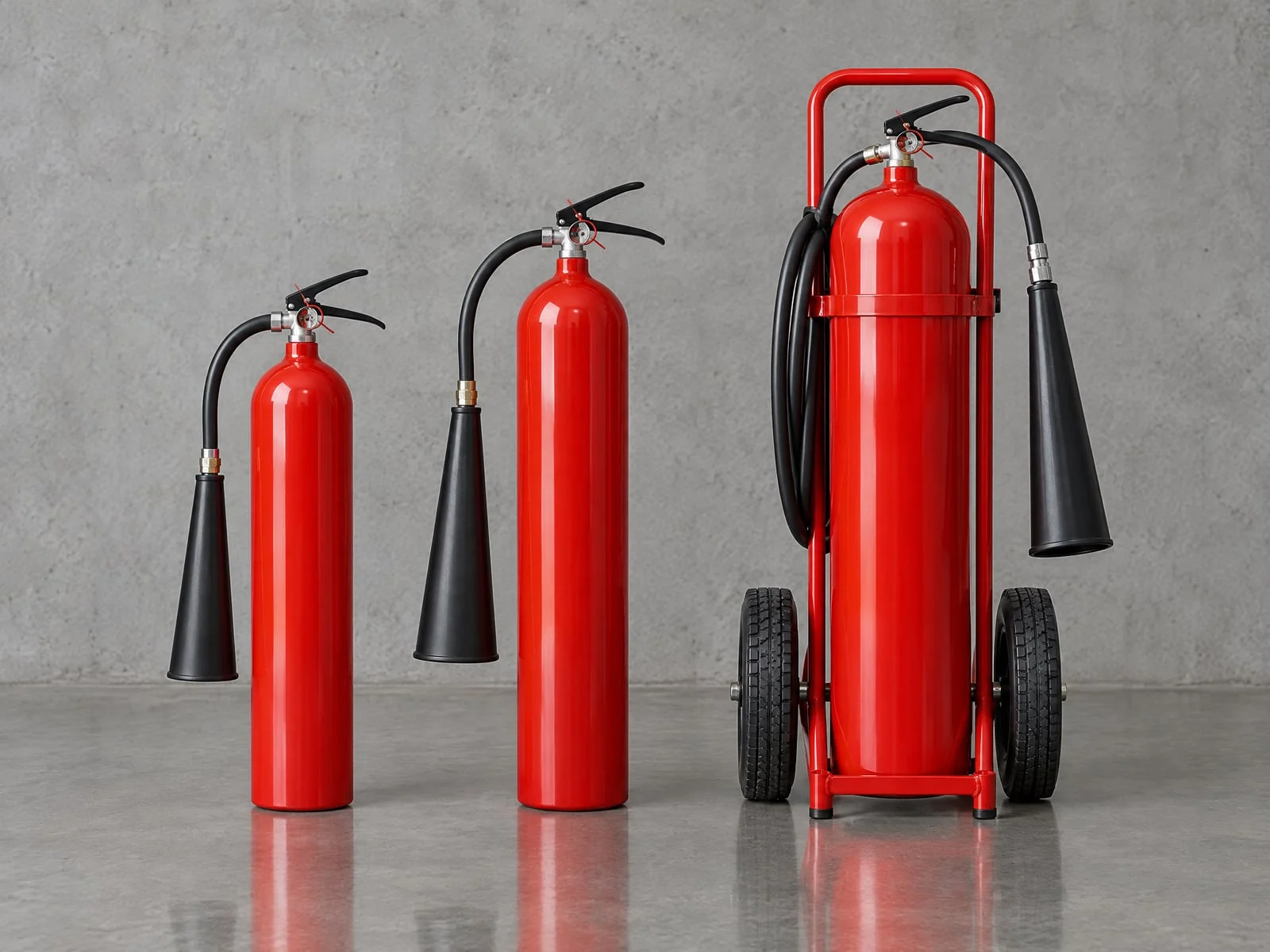
CO2 cylinder bank with valves
Stores the carbon dioxide under pressure
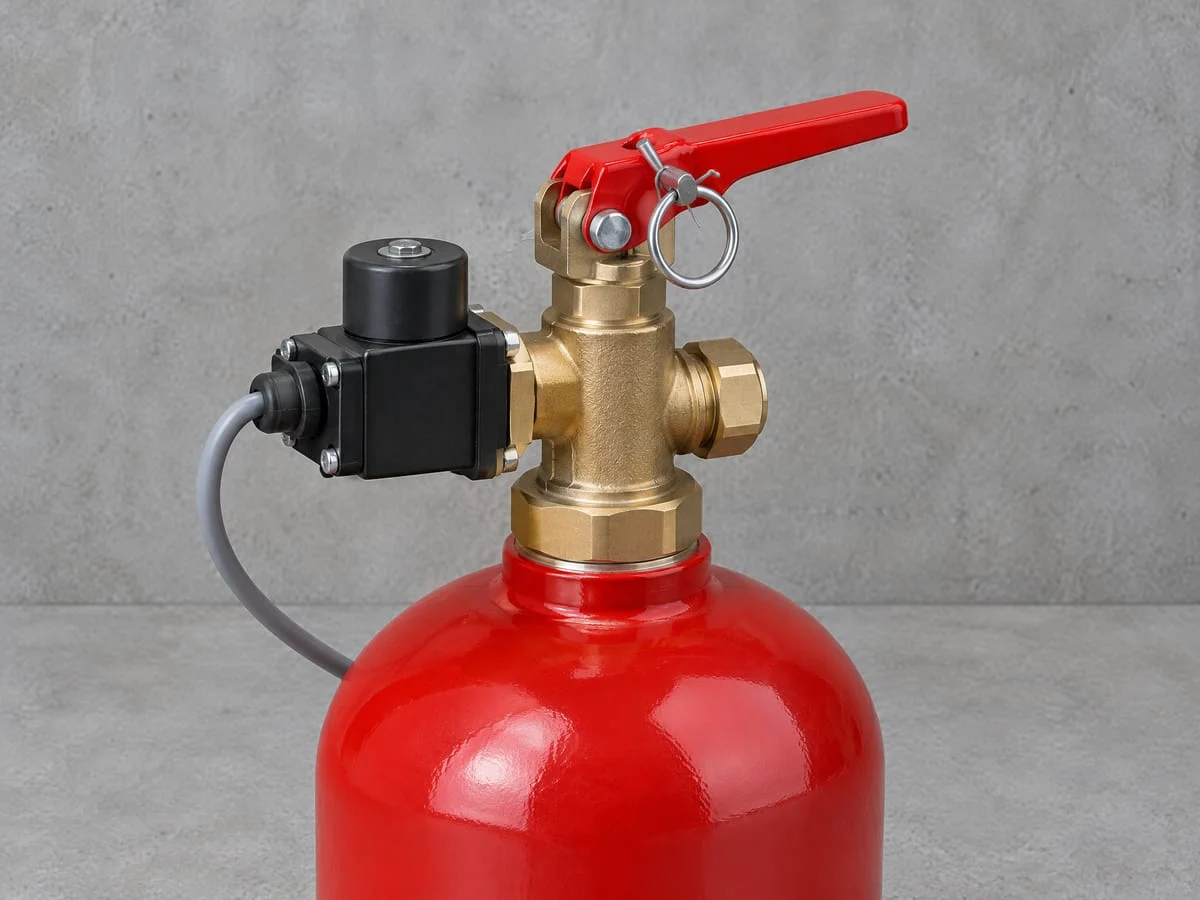
Solenoid and manual actuators
Open the cylinder valves automatically or by hand
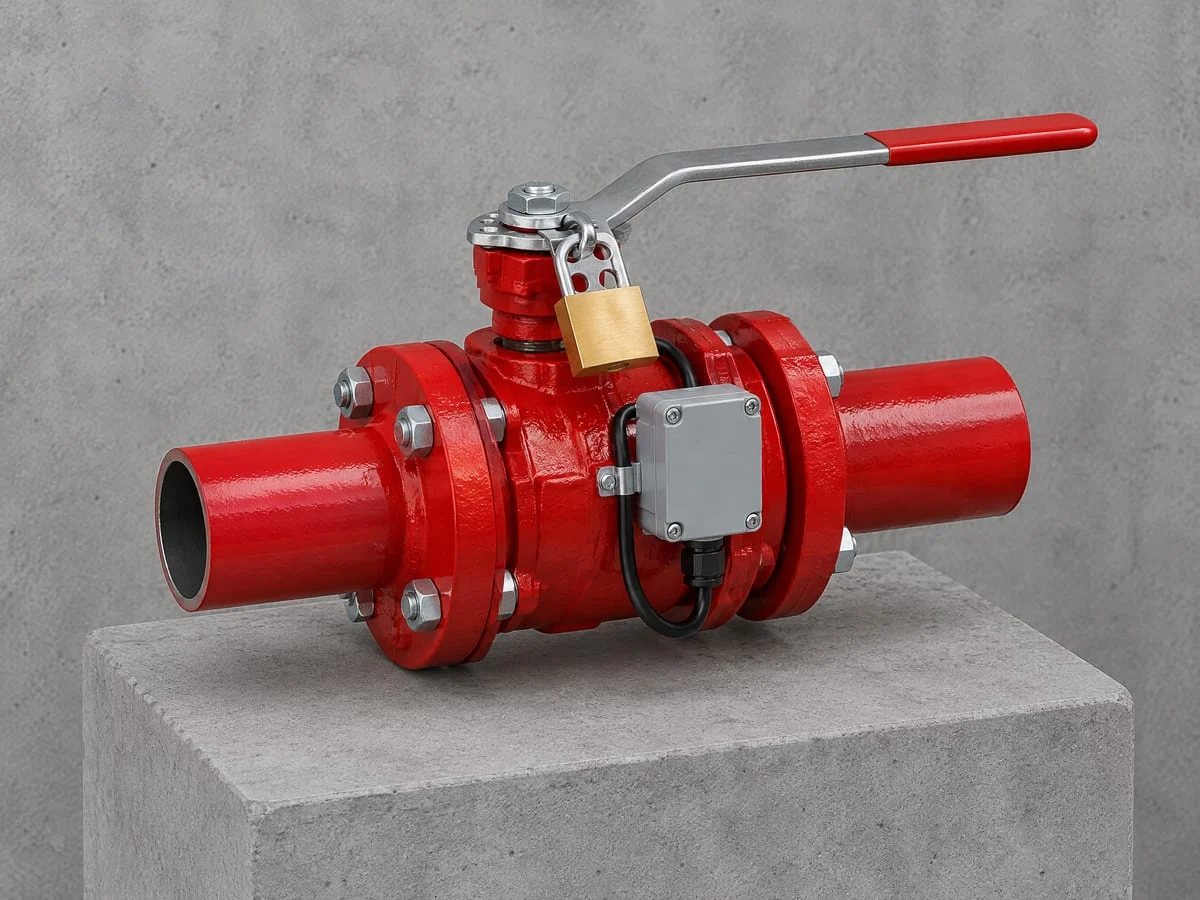
Lock-off valve
Stops the gas reaching the room while people are inside for maintenance
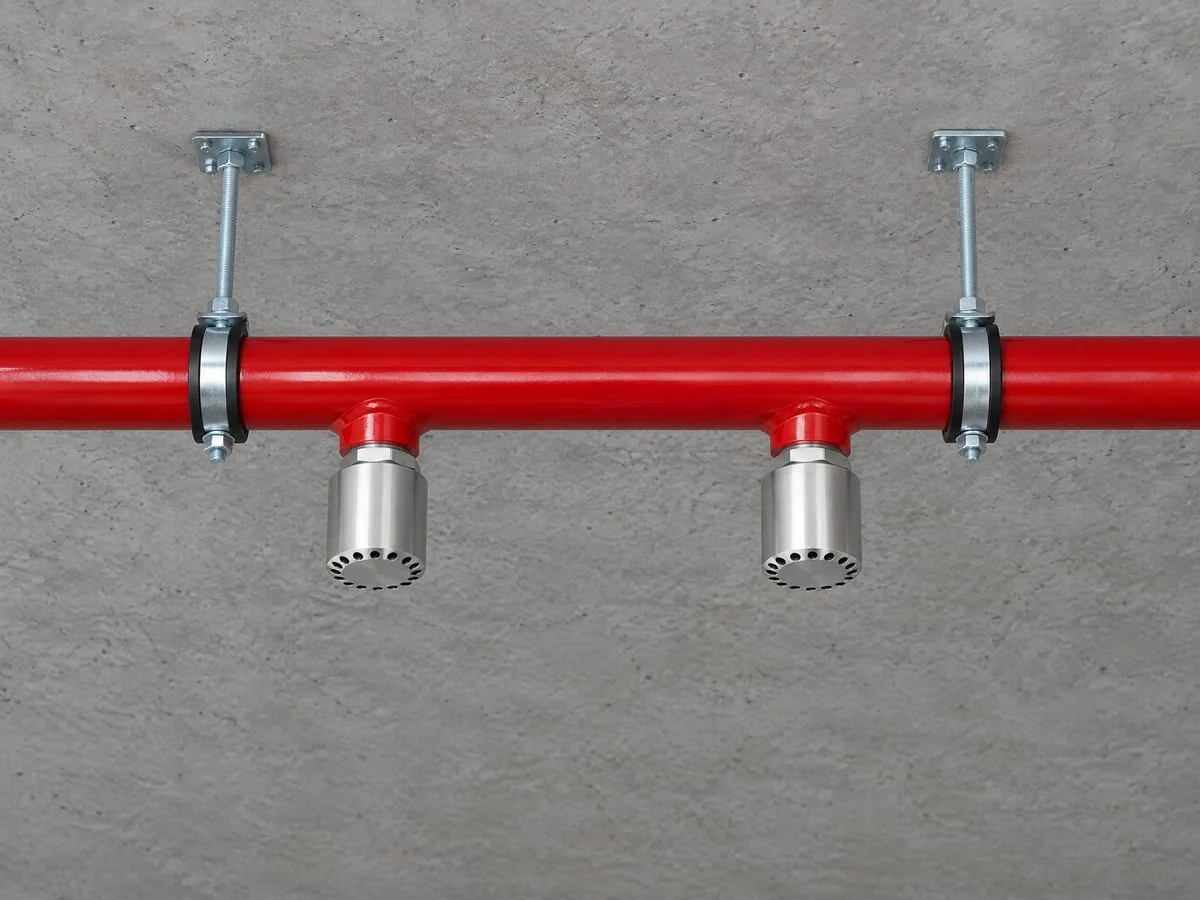
Discharge pipework and nozzles
Spread the CO2 through the room or onto the equipment
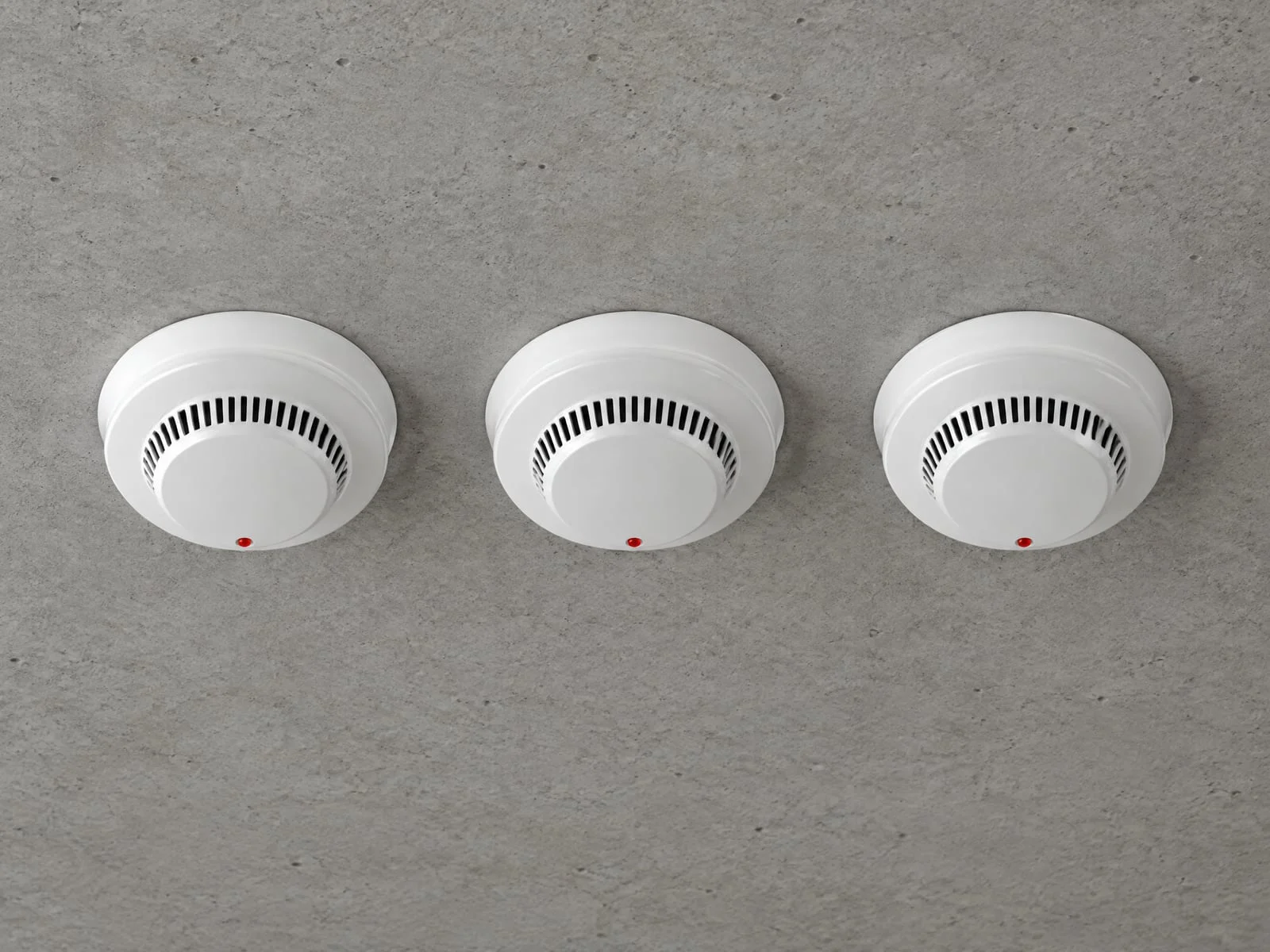
Smoke and heat detectors
Sense the fire, usually in two zones to avoid false discharge
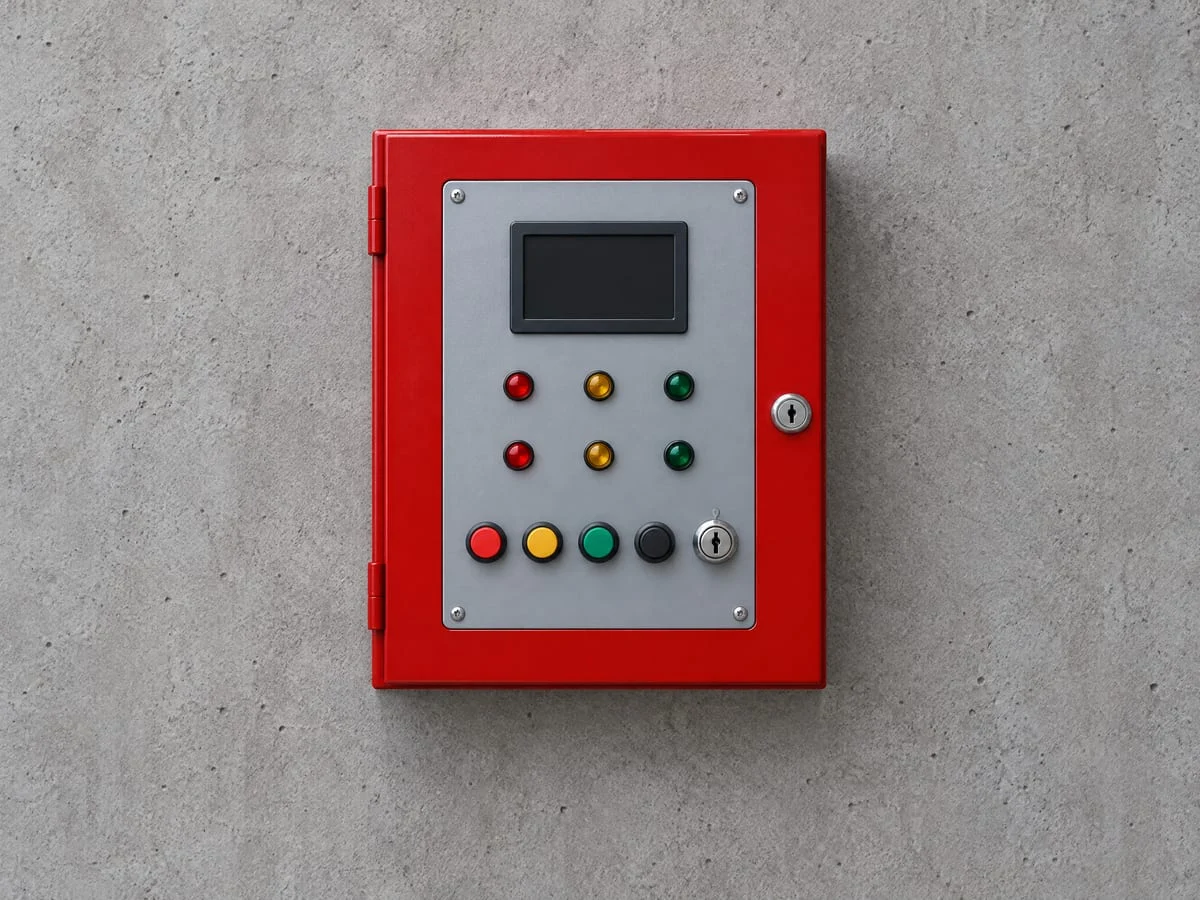
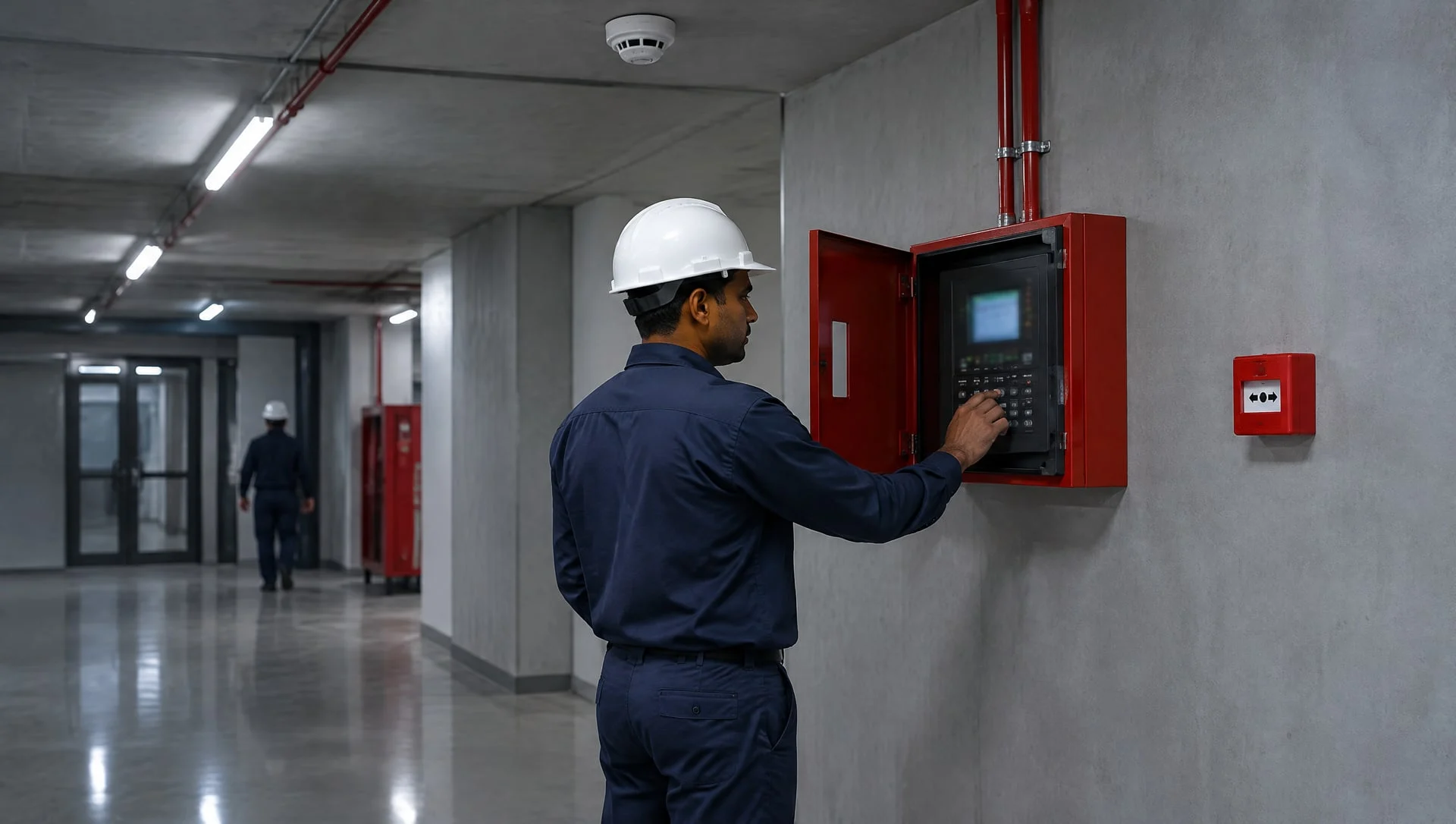
Releasing control panel
Sounds the warning, counts down and releases the gas
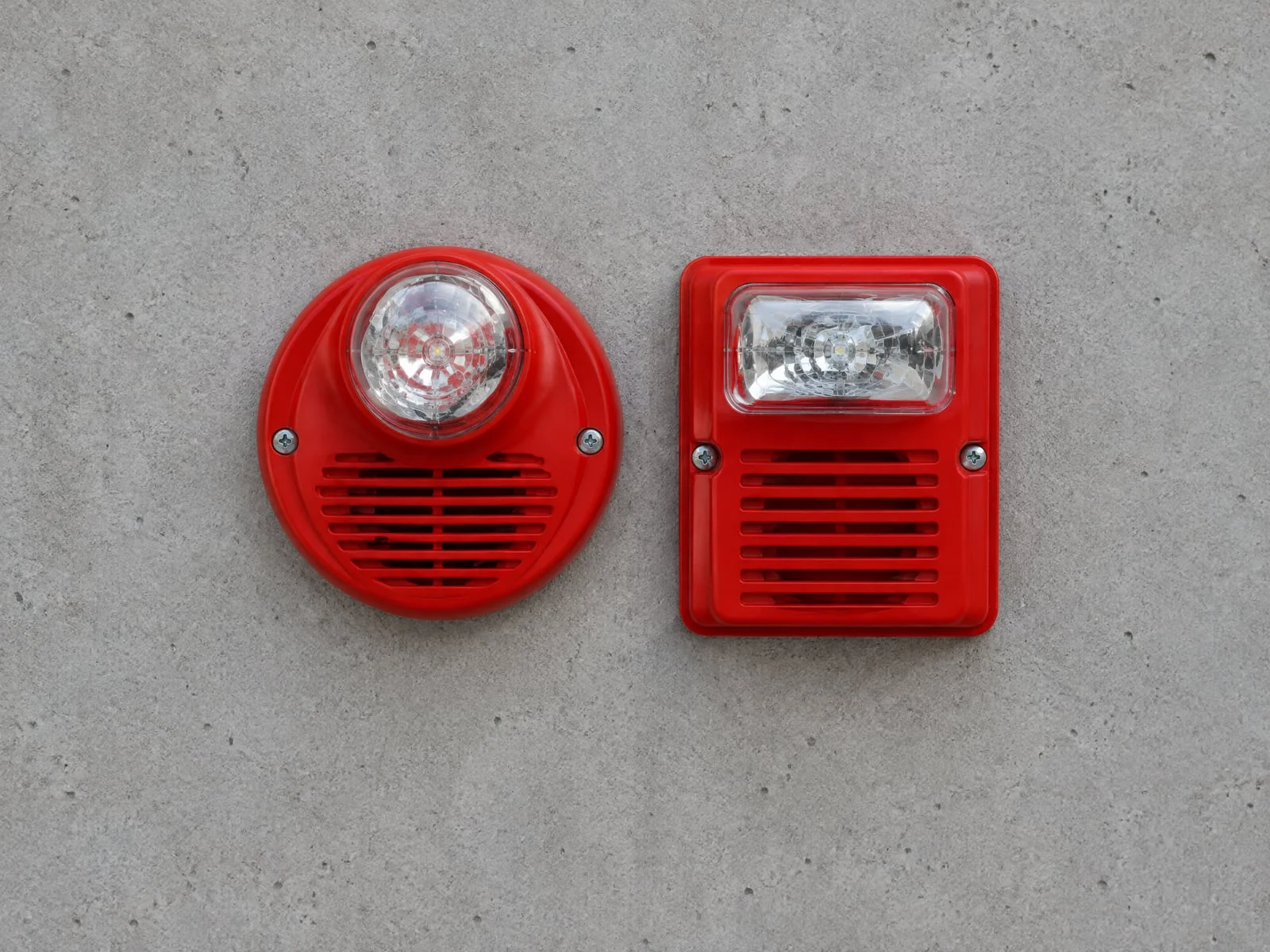
Hooters, strobes and warning signs
Warn people inside and outside the room before and during discharge
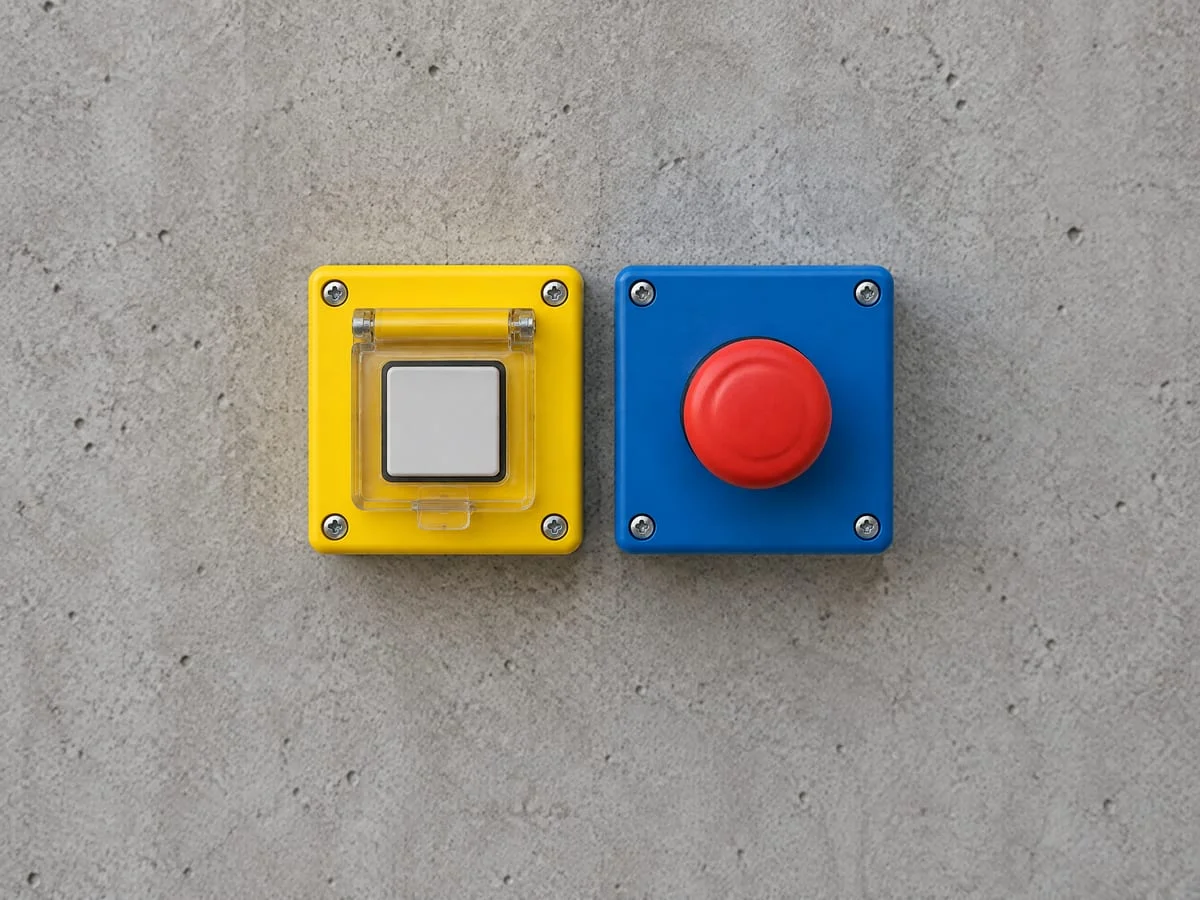
Manual release and abort switches
Let staff release the system or hold the release
Safety comes first
- CO2 is the right agent for many unoccupied rooms, but it has caused deaths where systems were badly designed. Every CO2 system we install includes:
- Warning before discharge: hooters and strobes, with a delay long enough for people to leave.
- Lock-off for maintenance: so the system cannot discharge while people are working inside.
- Clear signs: at every entrance and at the manual release, saying the room is protected by CO2.
- Release points outside the room: so nobody has to stay inside to operate it.
- Training: your staff learn the warning sequence, the abort switch and what to do after a discharge.
Design standards
We design CO2 systems to NFPA 12, the standard for carbon dioxide extinguishing systems, and to UL/FM requirements where the project calls for them. For every room we prepare a design sheet showing the volume, openings, design concentration, CO2 quantity, number of cylinders and nozzle layout.
Our process
Free site survey
We measure the rooms, check openings and ventilation, and study the fire risk.
Design
CO2 quantity calculation, cylinder bank, pipework and nozzle layout, detection and safety measures.
Supply and installation
Cylinders, pipework, nozzles, detectors, releasing panel and warning devices, installed by our own team.
Testing and commissioning
Detection and release circuits tested, lock-off and abort checked, room openings reviewed, and staff trained.
Form A
As a licensed agency, we issue Form A for the work, which you submit to the fire brigade.
AMC and Form B
Periodic checks of cylinder weight, detectors and the panel, and Form B every January and July.
Experience with electrical risks
Fire and electrical licences
Maharashtra Fire Services Licensed Agency (MFS/LA/RF-93/RD-95) and Maharashtra Electrical Contractor Licence No. 17545.
Utility work
Addressable fire alarm systems at 65 Adani Electricity receiving substations across Mumbai, May 2024 to January 2026.
Industrial clients
Including BPCL, Roquette India and Adani Electricity Mumbai.
Maintenance and Form B
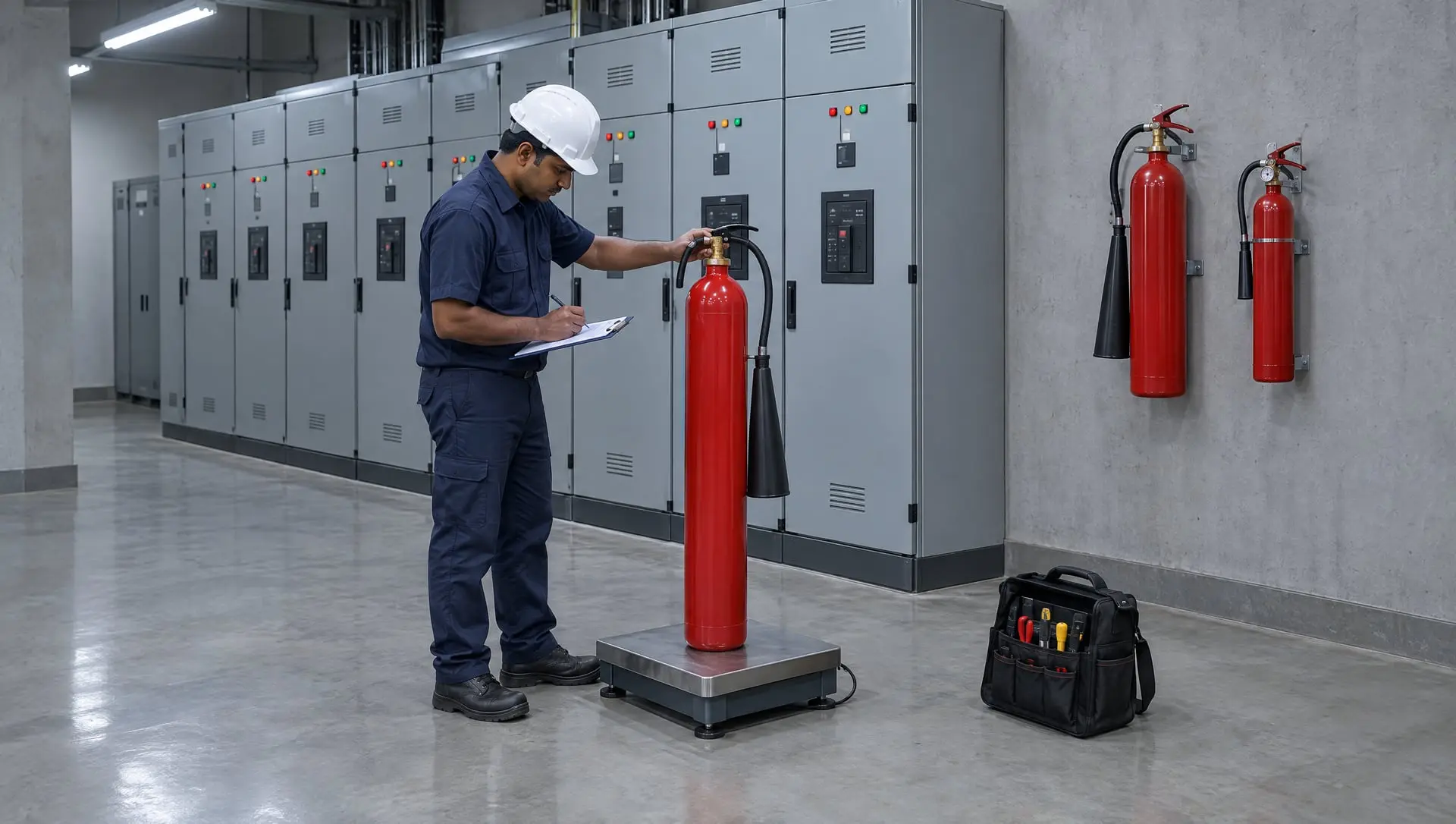
CO2 cylinders can lose gas slowly over time, and rooms change. Under AMC we weigh the cylinders, check the actuators, lock-off valve, detectors, releasing panel and warning devices, and tell you when new openings or changes to the room affect the design. A licensed agency must inspect the fire systems and issue Form B every January and July, and we can include this in your AMC.
Why choose Cease Fire
Since 1992
1,500+ projects and the Rashtriya Nirman Ratna Award for Best Government Contractor (2002).
Safety-led design
Warnings, delay, lock-off and training built into every CO2 system.
Room-by-room calculations
A design sheet for every protected room.
One team
Design, installation, testing and AMC from one company.
Book a free site survey
Send us the room sizes, what the room contains and whether anyone works in it. We will recommend the right agent and send a proposal with the calculation.
Frequently asked questions
What is a CO2 fire suppression system?
It is a fixed system that floods a closed room, or covers one piece of equipment, with carbon dioxide gas. The CO2 lowers the oxygen level so the fire goes out, and it leaves no residue.
Is a CO2 suppression system safe for people?
No, not at extinguishing concentrations. It is used only in normally unoccupied areas, with warning alarms, a delay before release, a lock-off valve for maintenance and clear signs.
Where is a CO2 flooding system used?
It is used in electrical rooms, DG rooms, cable galleries, machinery spaces and record stores that are not normally occupied. Occupied rooms usually get a clean agent or inert gas system instead.
What is the difference between total flooding and local application?
Total flooding fills the whole closed room with CO2. Local application discharges CO2 directly onto one piece of equipment, such as a printing press or dip tank.
Which standard covers CO2 fire suppression systems?
NFPA 12 is the standard for carbon dioxide extinguishing systems. We design to it and to UL/FM requirements where the project calls for them.
How is the amount of CO2 calculated?
It is worked out from the room volume, openings, type of fire risk and the design concentration needed. We prepare a design sheet for every room.
How often should a CO2 system be checked?
Most sites have quarterly checks and an annual service under AMC, including weighing the cylinders. A licensed agency must also inspect the system and issue Form B every January and July.
What is the difference between CO2 and clean agent systems?
CO2 suits rooms nobody normally occupies, such as DG rooms and cable galleries, but is dangerous to people at extinguishing levels. Clean agents such as FM-200 and FK-5-1-12 suit rooms where people work, such as server rooms.
Question not answered here? Call our team, Monday to Saturday, 9 am to 7 pm.
Call +91 9920676281