
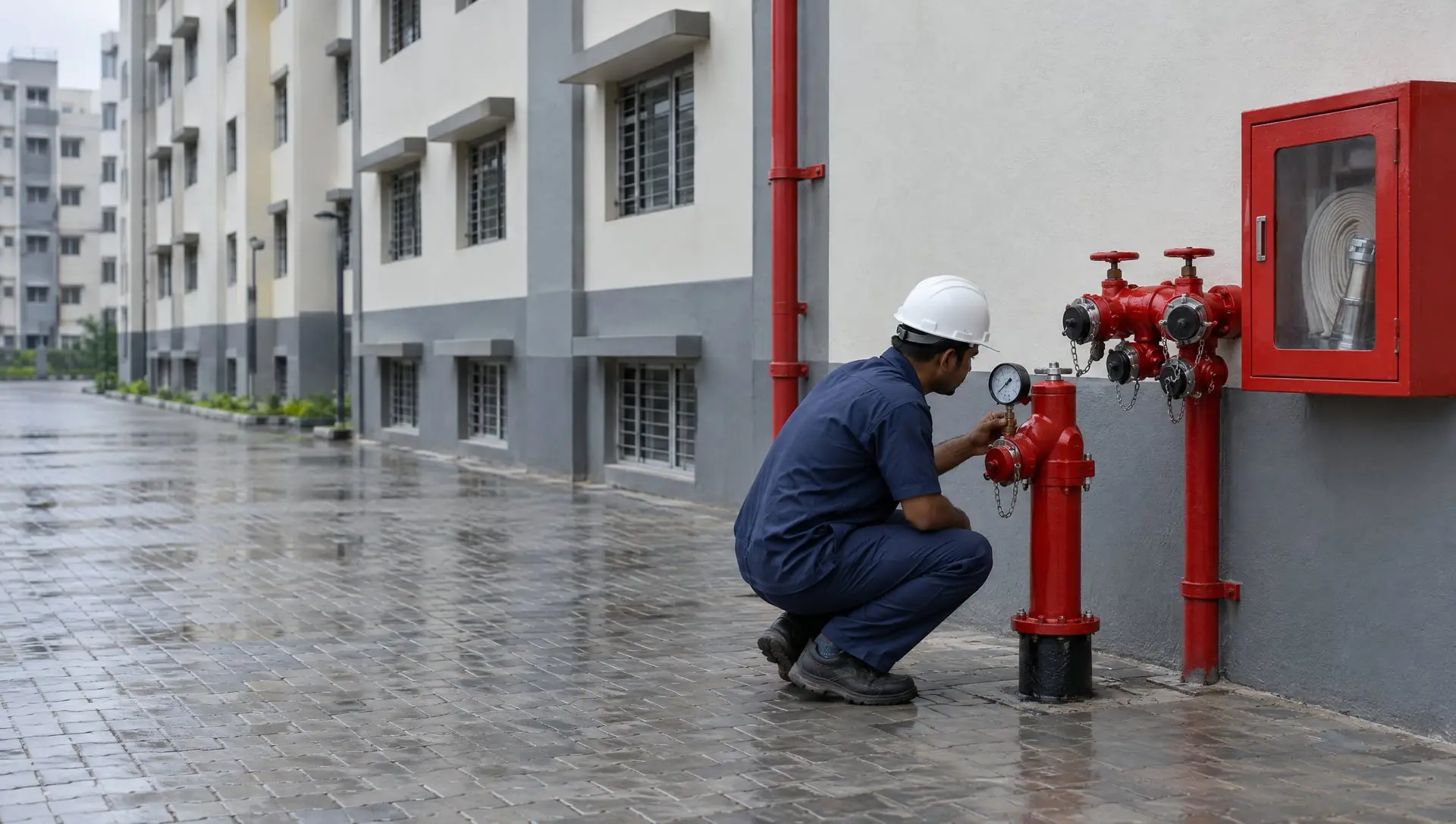
Fixed Fire Hydrant System in Mumbai
Cease Fire & Electrical Services LLP designs and installs the fixed fire hydrant system for residential towers, commercial buildings, factories, warehouses and campuses in Mumbai. A fixed fire hydrant system is permanent pipework, kept full of water under pressure, with hydrant valves inside the building on wet risers and outside on a yard hydrant ring main. As a Maharashtra Fire Services Licensed Agency, we install, test and certify the system with Form A, and maintain it under AMC.
What is a fixed fire hydrant system?
"Fixed" means the pipes, valves and outlets are built into the building and site, ready before a fire starts. Staff and the fire brigade connect hoses to the hydrant valves and get water straight away, instead of laying hose from a tanker. The system is fed by the fire pump room and fire water tank, and can be boosted by the fire brigade through the fire brigade inlet.
Internal and external hydrants
Internal hydrants (wet riser)
Where it isInside the building, usually in or next to the staircase
What it includesVertical riser pipe with a landing valve, hose box, hoses and branch pipe on each floor
First-aid hose reels
Where it isInside the building, near exits and on each floor
What it includesHose reel drum with rubber hose and shut-off nozzle for occupants to tackle a small fire
External hydrants (yard hydrants)
Where it isAround the outside of the buildings
What it includesUnderground or above-ground ring main with hydrant valves spaced around the site
Fire brigade inlet
Where it isAt the building or site boundary
What it includesLets the fire brigade pump water into the system from its tender
A housing society or office tower usually needs a wet riser and hose reels. A factory, warehouse or campus usually needs both internal hydrants and a yard hydrant ring main around the buildings.
Wet riser, dry riser and yard hydrant
- Wet riser: the riser is always full of water under pressure from the fire pumps, so water is available at the landing valve at once.
- Dry riser: the riser is kept empty and the fire brigade charges it through the inlet when it arrives.
- Yard hydrant: an external hydrant valve on a ring main around the site, used by site staff and the fire brigade.
Components we install
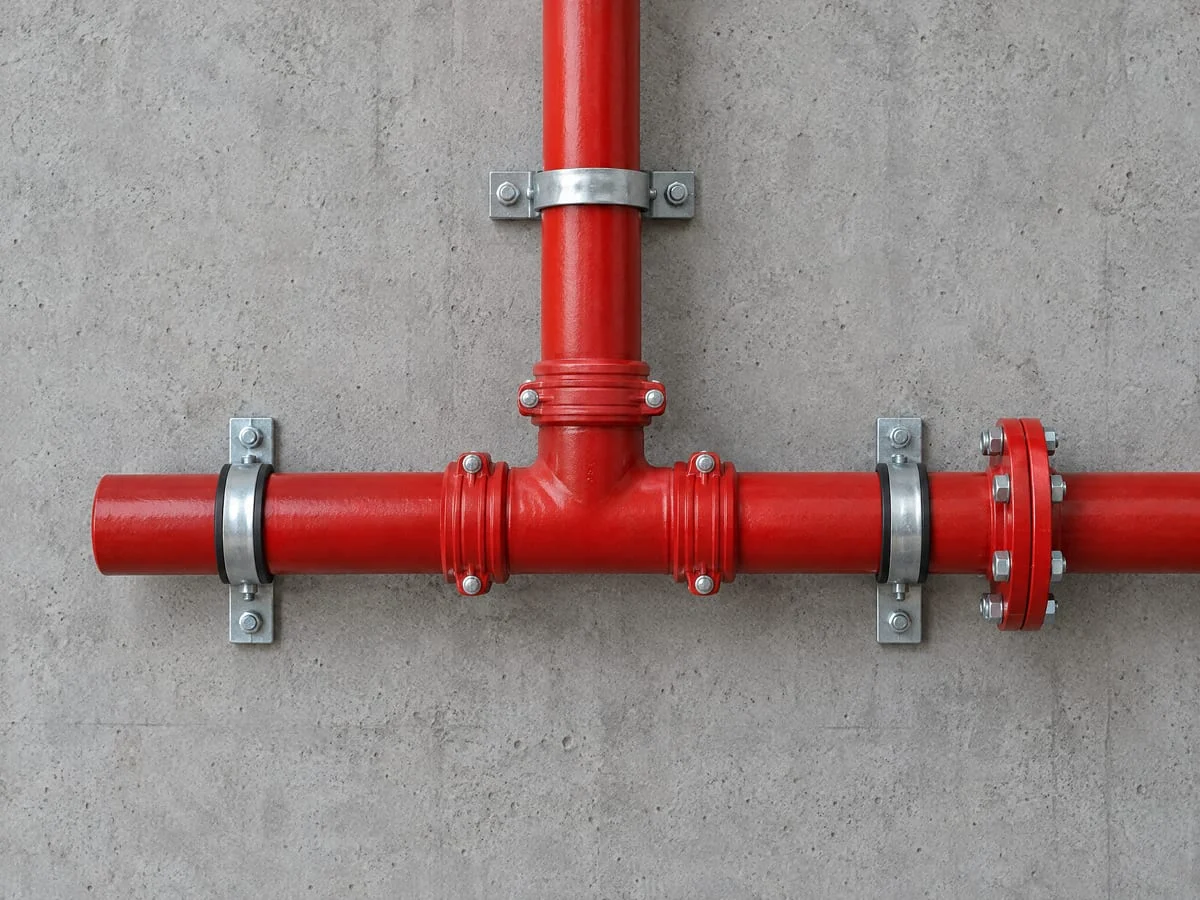
Riser and ring main pipework
Carries water from the pump room to every outlet
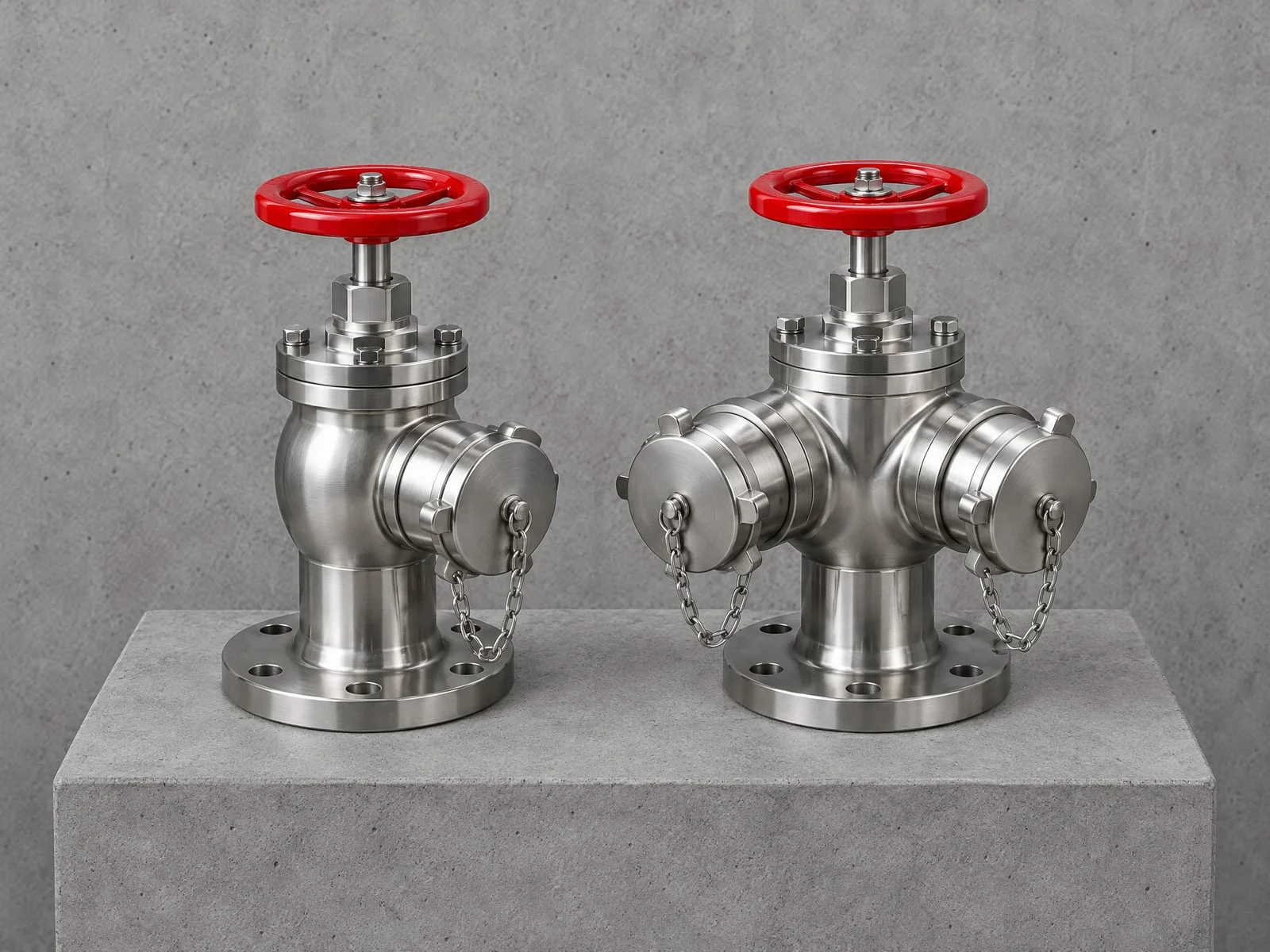
Landing valves (single or double outlet)
Hose connection points on each floor of the riser
Yard hydrant valves and stand posts
External hose connection points on the ring main
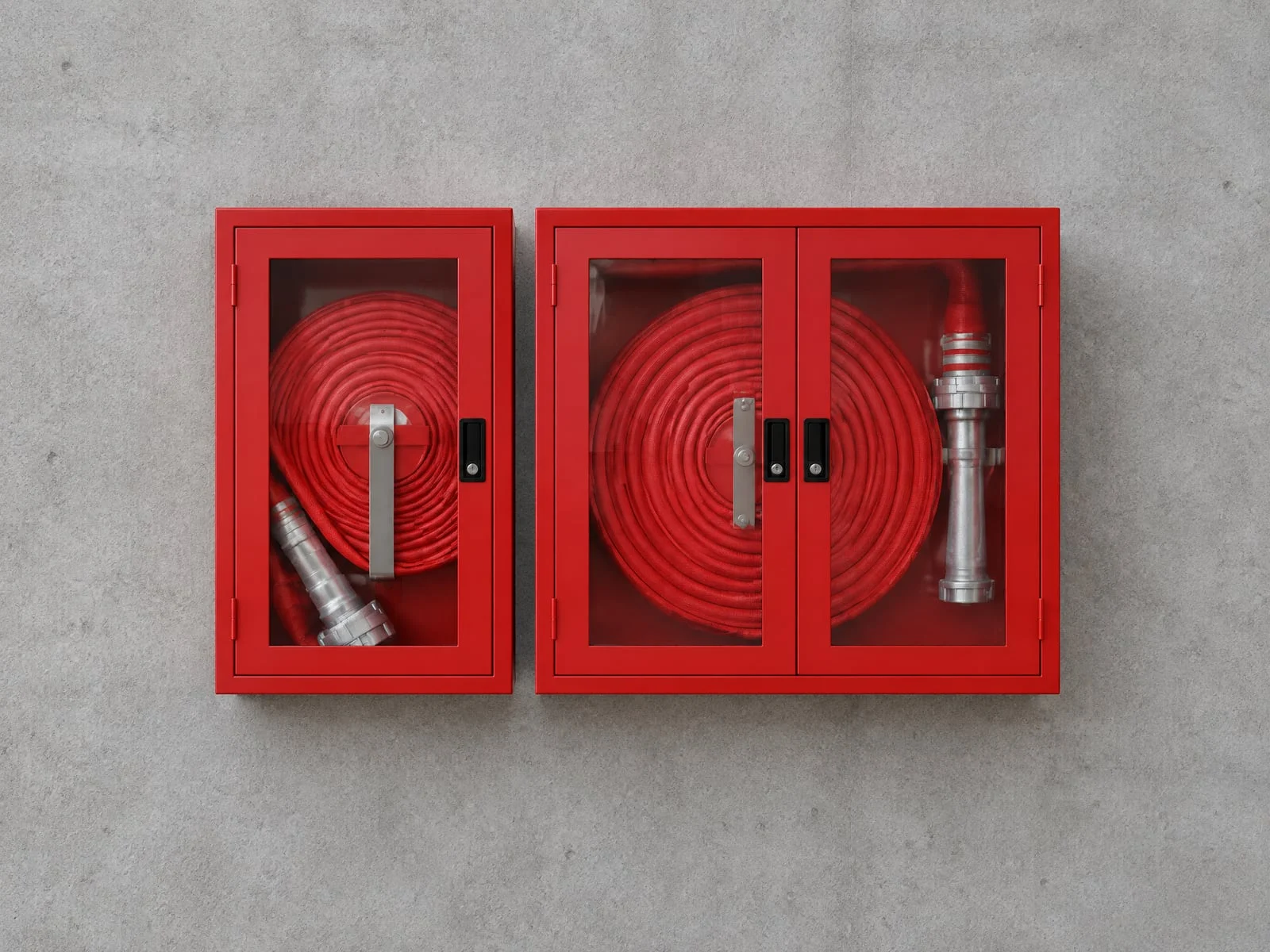
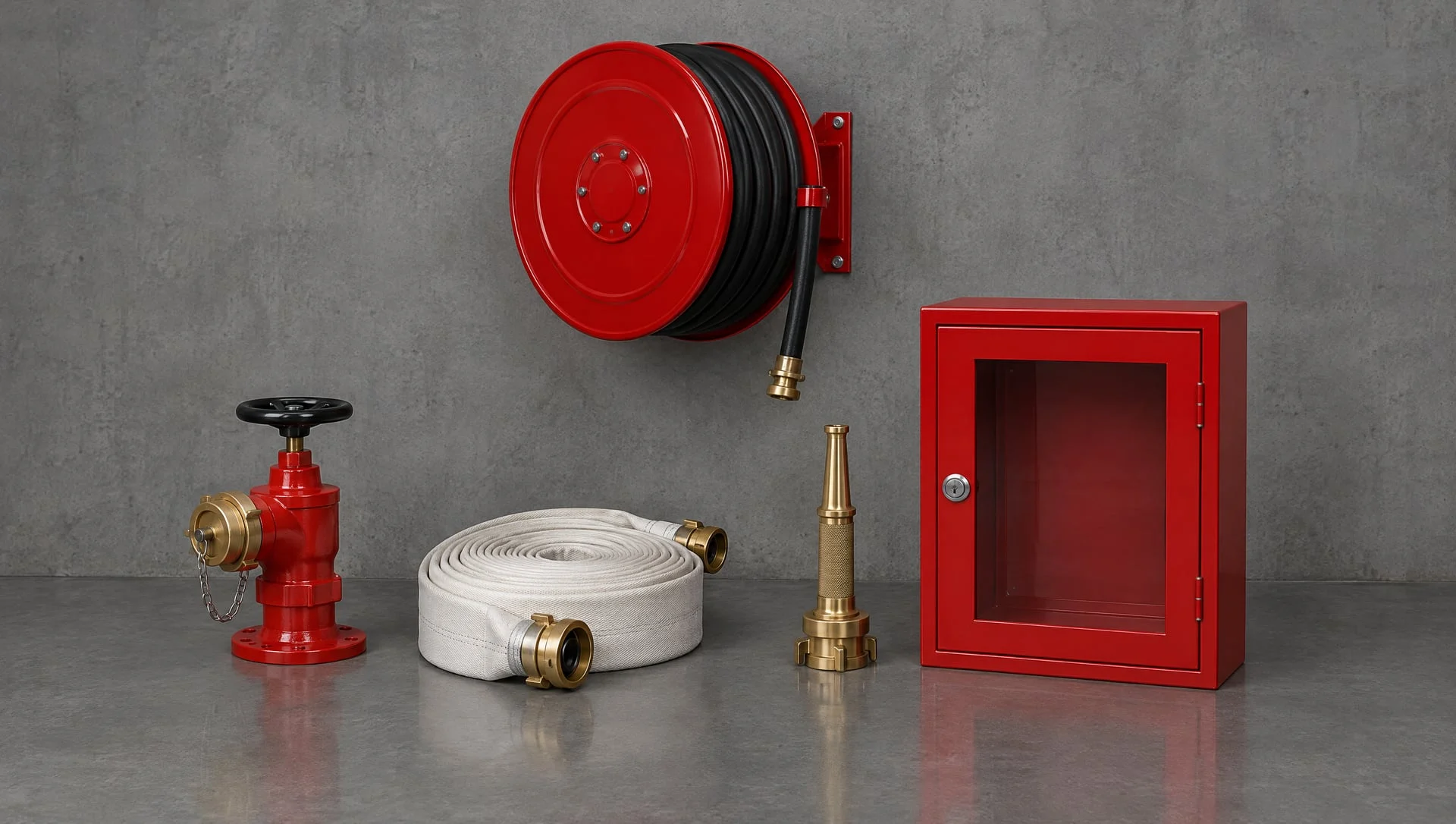
Hose boxes, fire hoses, couplings and branch pipes
Keep hoses ready next to each hydrant valve
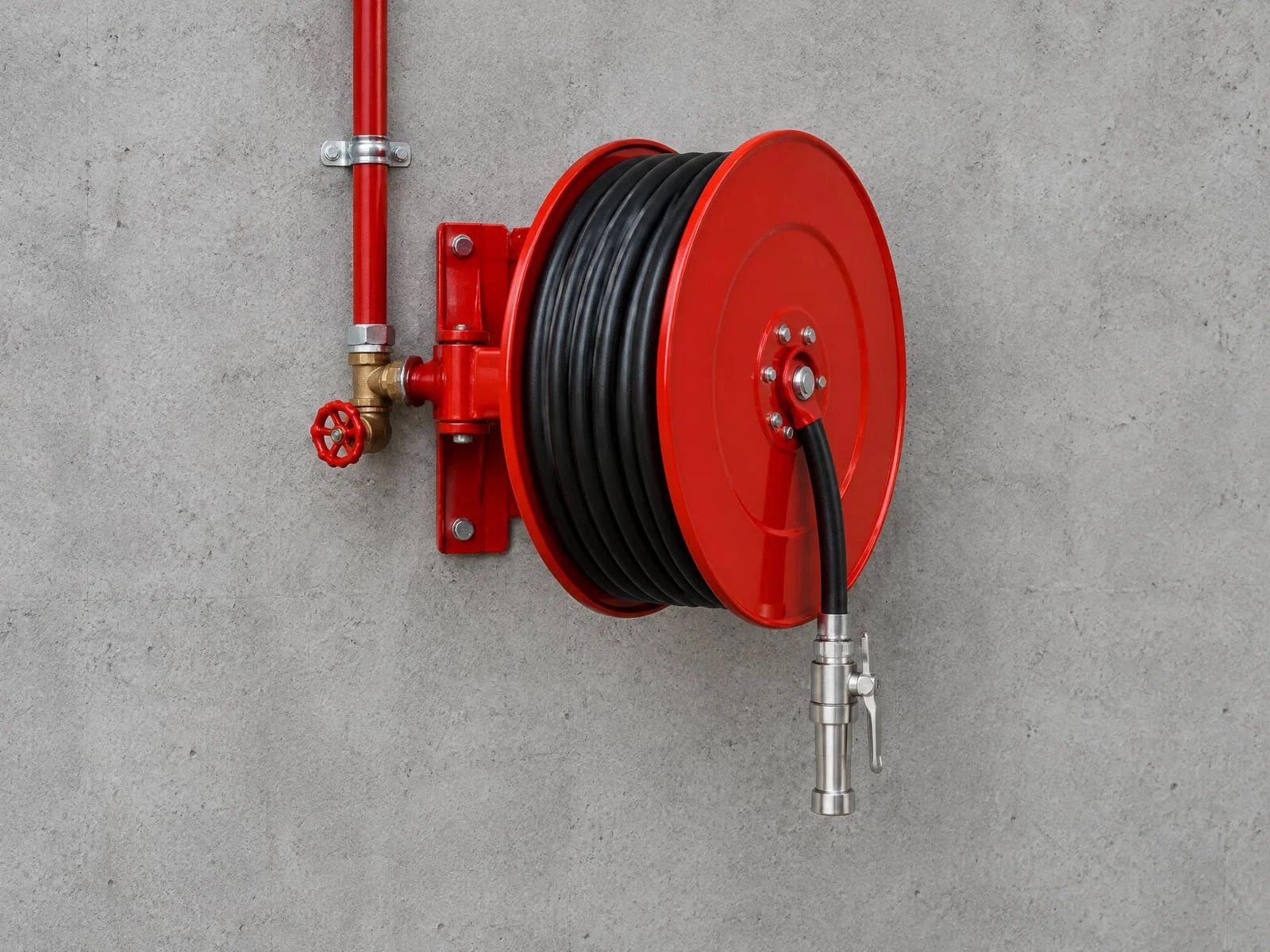
Hose reel drums
First-aid fire fighting for occupants
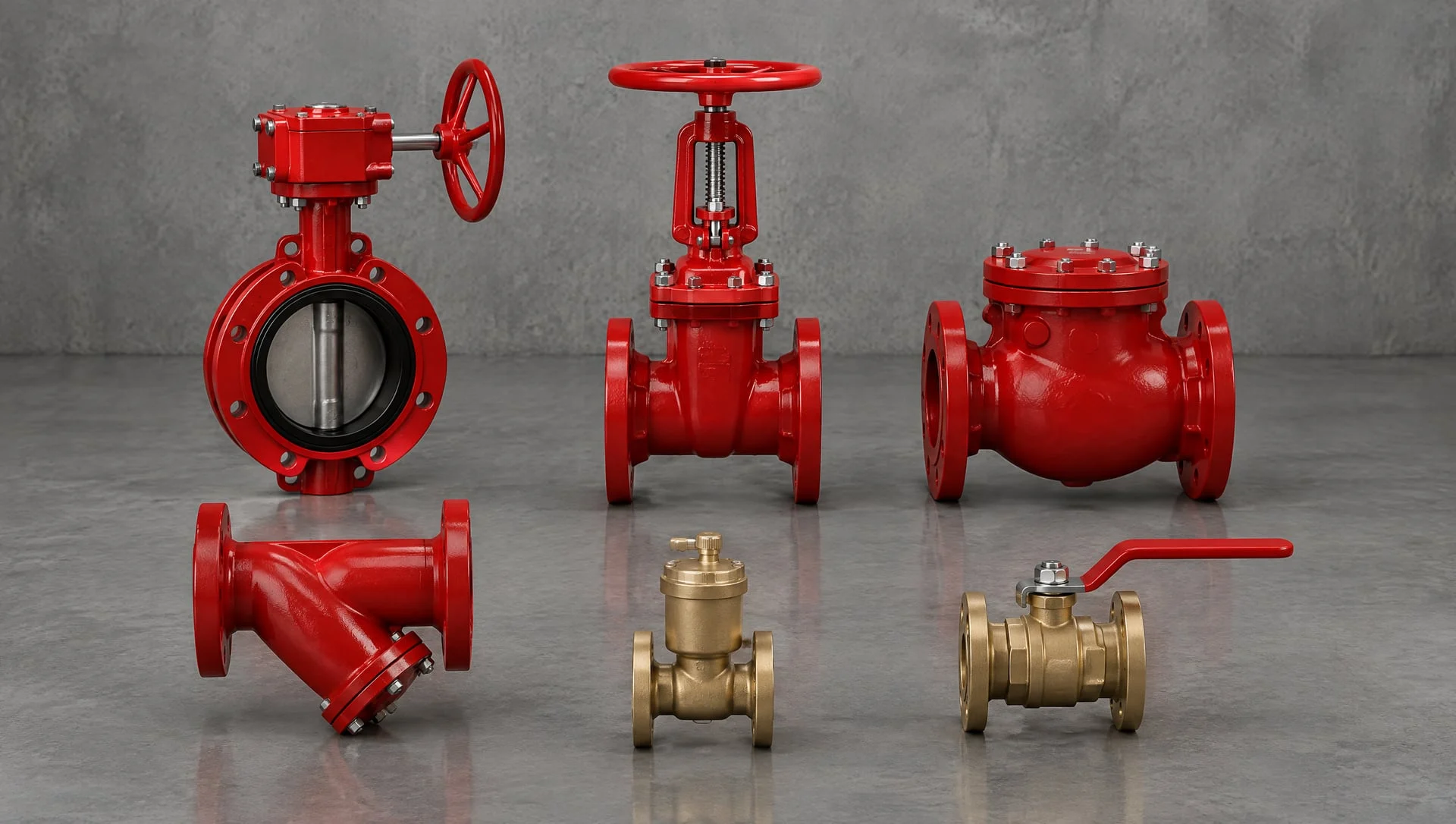
Isolation (sluice or butterfly) valves
Isolate sections of the ring main or riser for repair
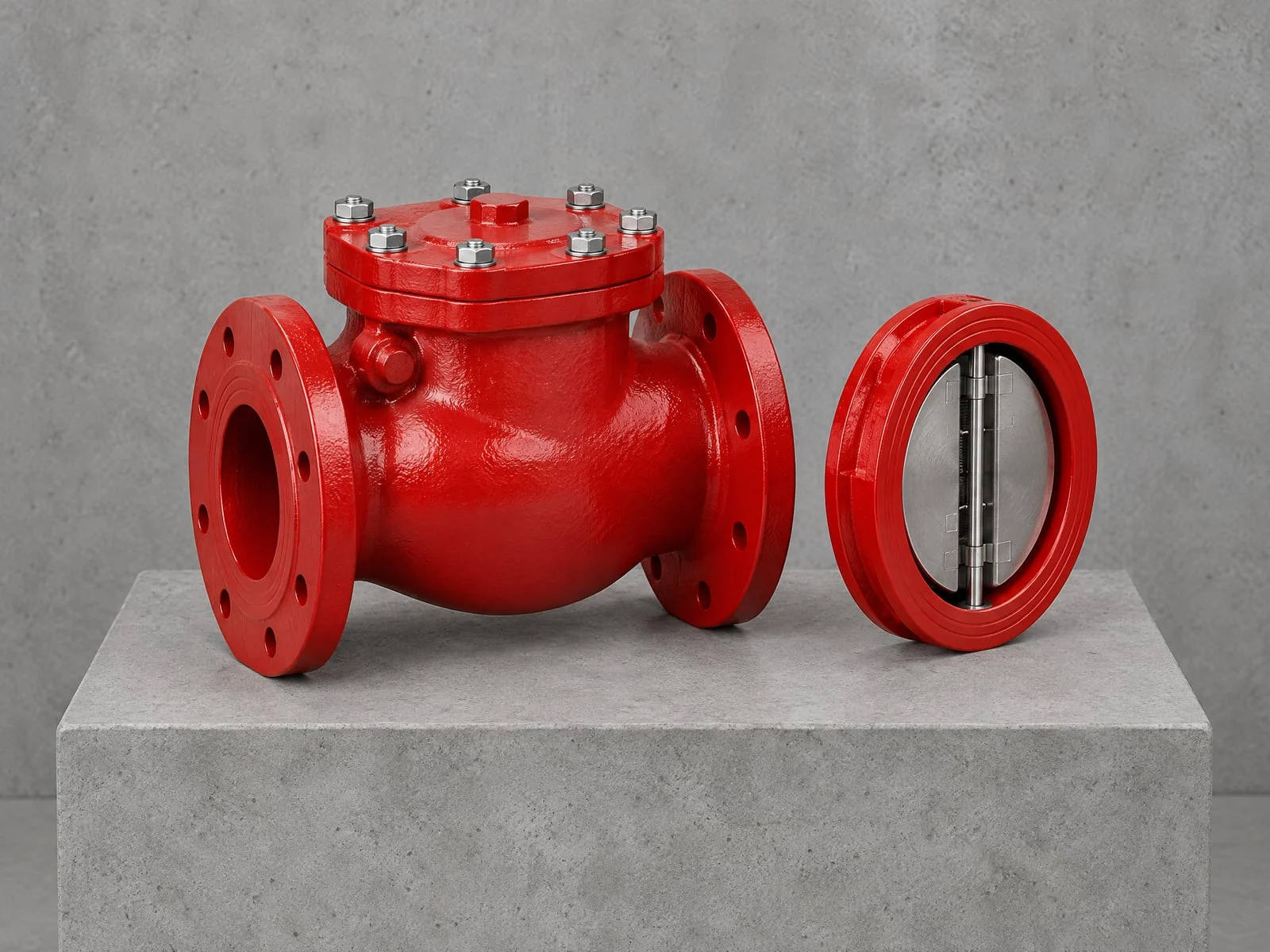
Non-return valves
Keep water flowing the right way
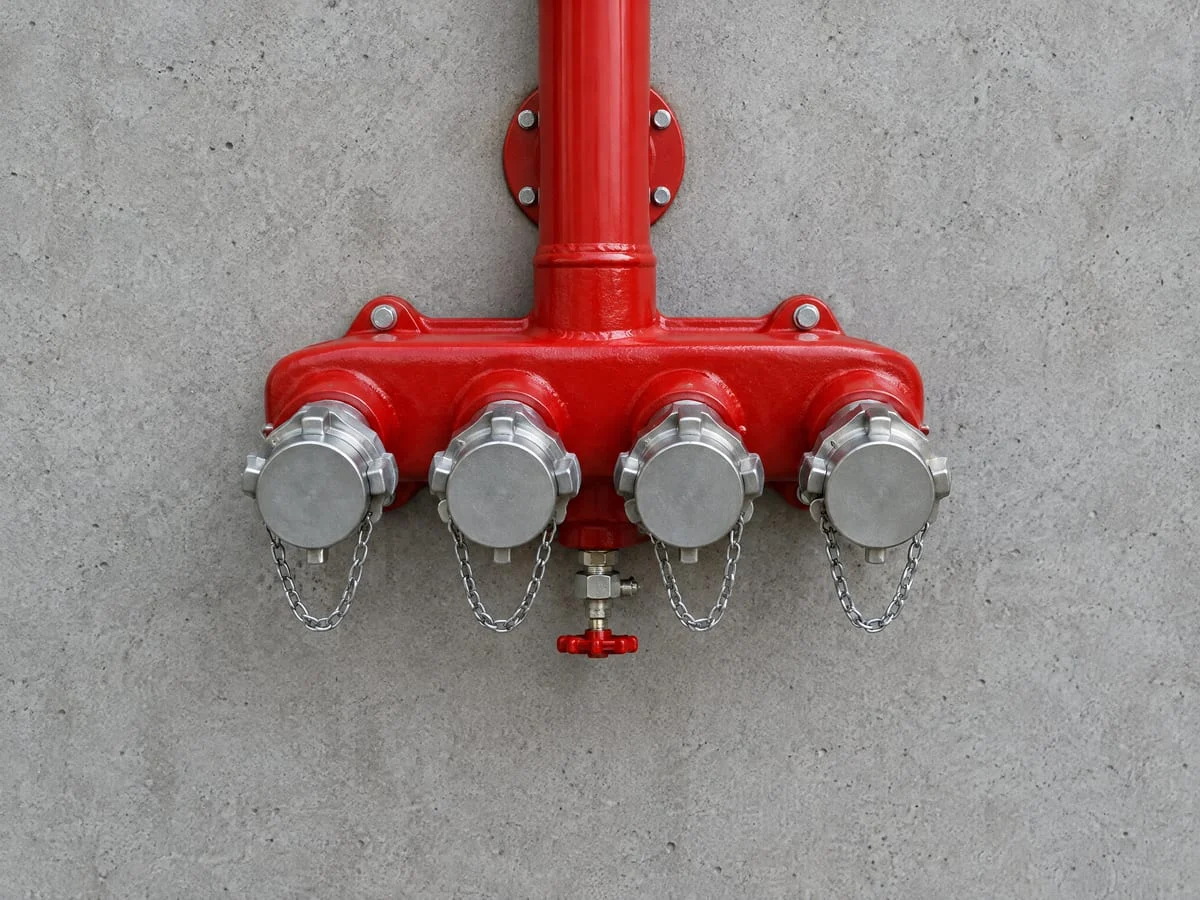
Fire brigade inlet
Lets the fire brigade boost the system
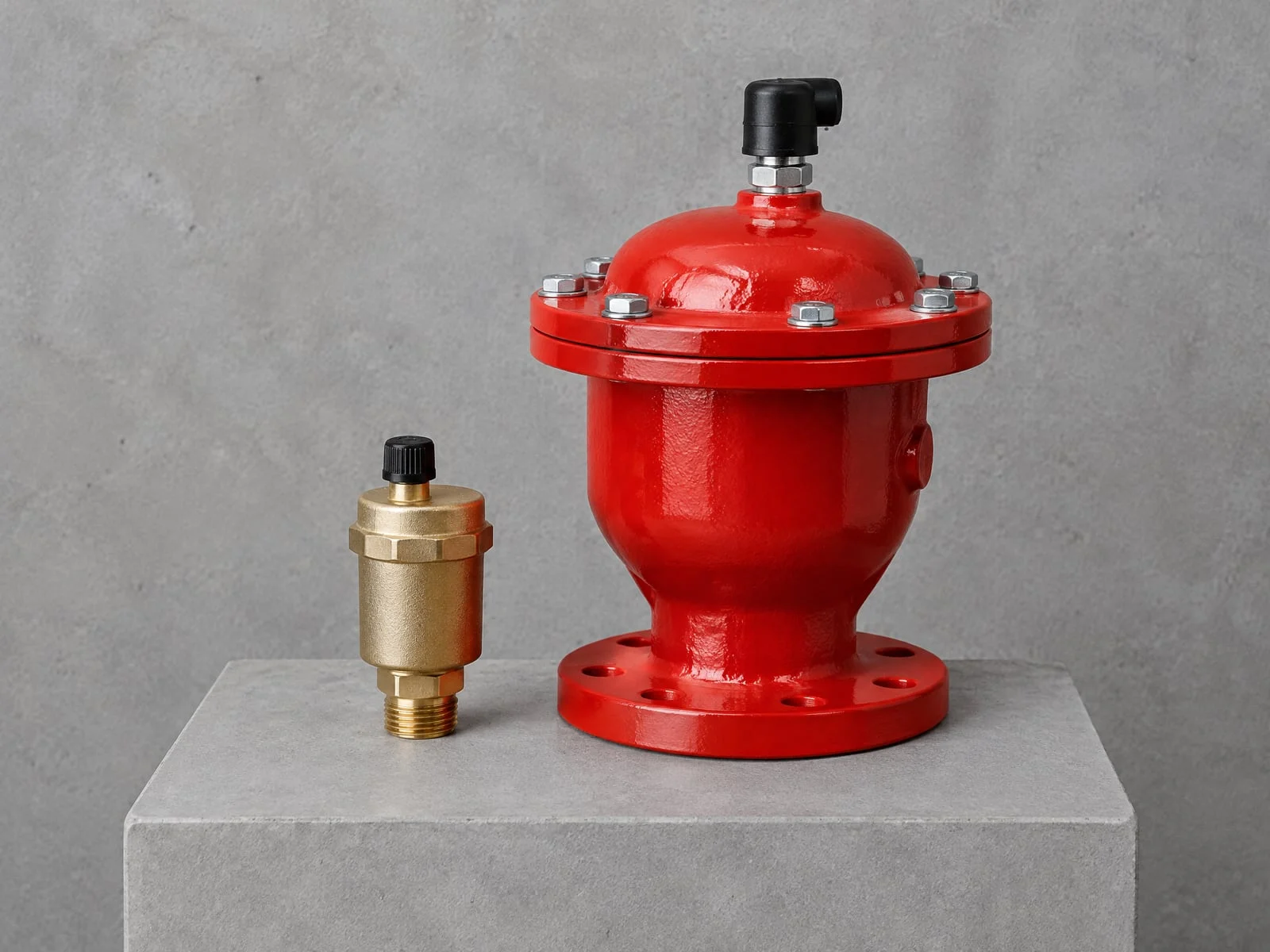
Pressure gauges and air release valves
Show pressure and release trapped air
We supply the hydrant valves, hoses, hose reels, hose boxes and valves ourselves. UL listed and FM approved pumps and valves are available where your consultant or insurer needs them.
Design standards
We design fixed hydrant systems to the National Building Code of India (NBC) and NFPA standards, and to UL/FM requirements where the project calls for them. Two Indian Standards are also worth knowing:
IS 3844:1989
CoversInternal hydrants and hose reels
Examples of what it sets outLanding valve control 1 to 1.2 m above the floor; hose reels placed so no part of the floor is more than 6 m from the nozzle
IS 13039:1991
CoversExternal hydrant systems
Examples of what it sets outMains laid as interconnected rings; underground mains at least 1 m deep; hydrants at least 2 m from the building face
The exact layout, pipe sizes and pump duty come from the design and hydraulic calculations for your building, and from the fire brigade's requirements.
Our process
Free site survey
We study the building, site layout and any existing system, and confirm what the fire brigade will expect.
Design
Riser and ring main layout, hydrant positions, hydraulic calculations and drawings.
Supply and installation
Pipework, risers, ring main, valves, hose boxes, hose reels and the fire brigade inlet, installed by our own team.
Testing and commissioning
Hydrostatic pressure testing of the pipework, flow and pressure checks at the outlets, and a demonstration and training for your staff.
Form A
As a licensed agency, we issue Form A for the work, which you submit to the fire brigade.
AMC and Form B
Usually quarterly checks with an annual service, and the Form B certificate every January and July.
Hydrant projects
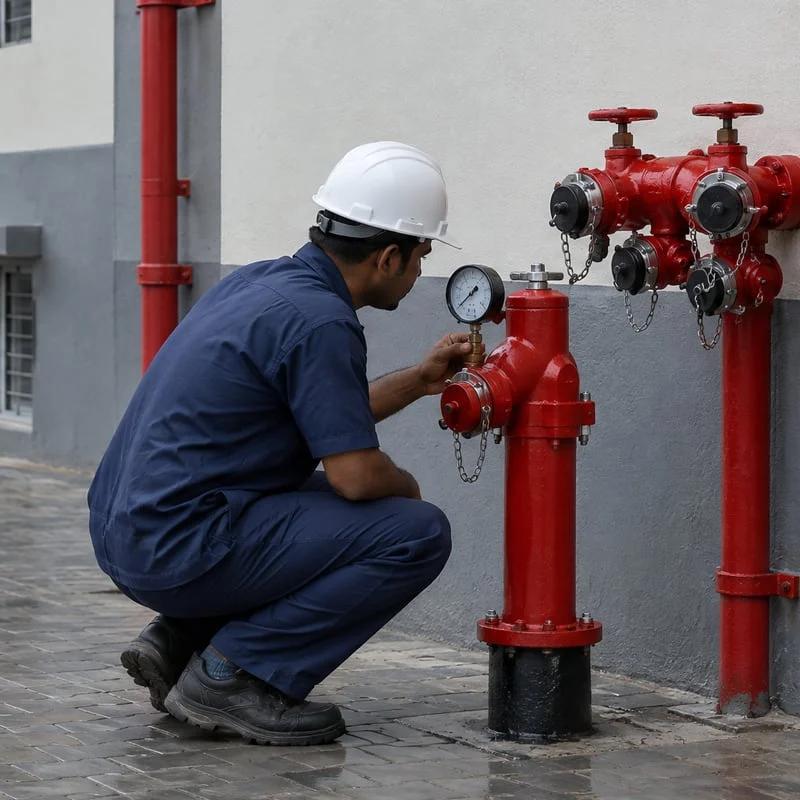

LBS IMU Mumbai Port Campus (CPWD), Sewri
Fire fighting and sprinkler systems for a G + 11 hostel.
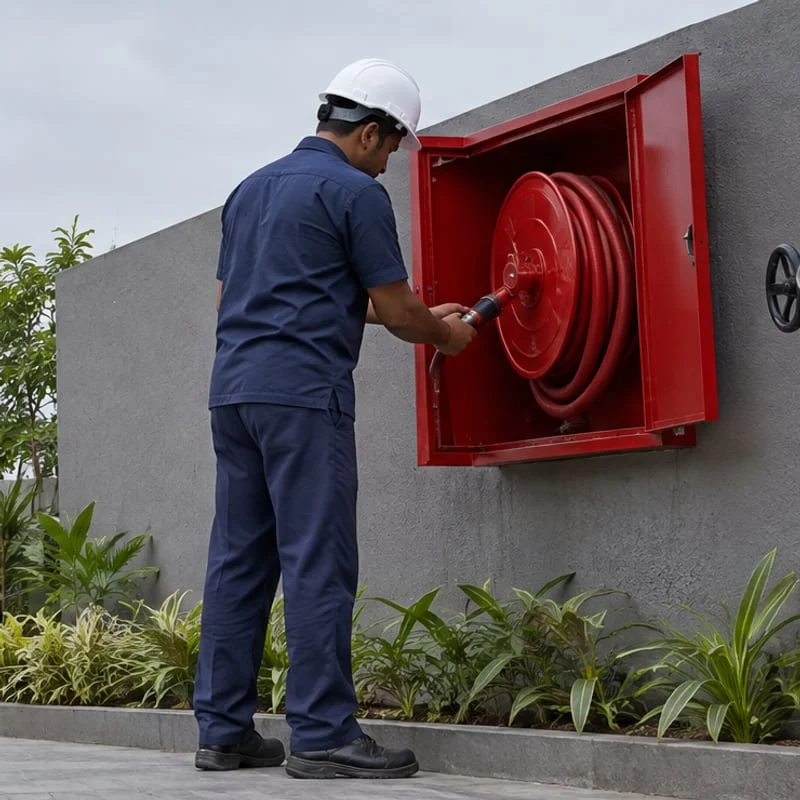

Palkhi Roha, Kandivali East (G + 14)
Fire fighting, sprinkler, fire detection and signage systems, completed in April 2024.
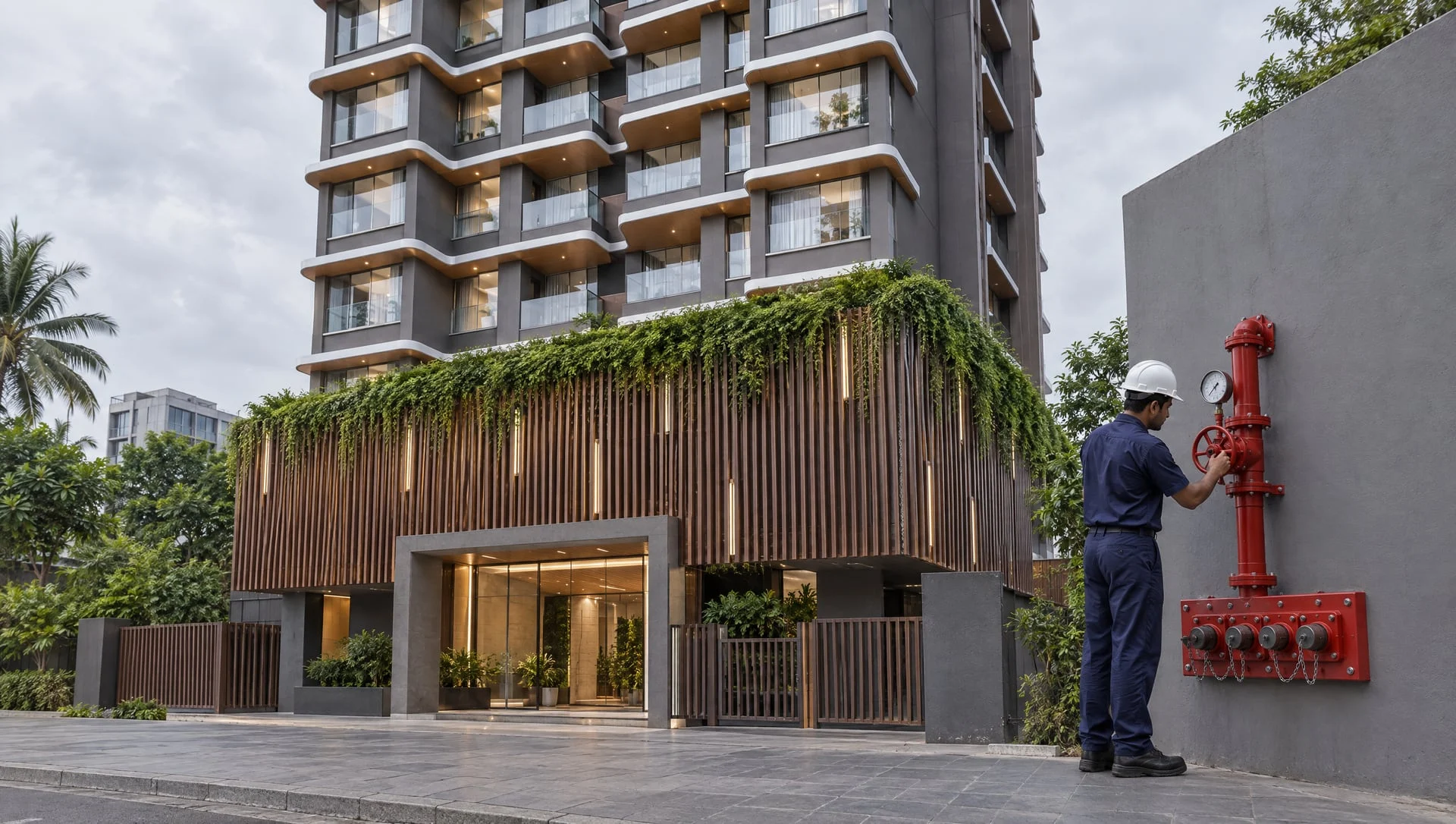
Palkhi MRDA, Kandivali (G + podium + 13), for KCD Realty
Fire fighting, sprinkler, fire detection and signage systems.
Maintenance and Form B
On each service visit we check every landing valve and yard hydrant, the hoses, couplings, branch pipes, hose boxes and hose reels, isolation valves, pressure gauges and the fire brigade inlet, and look for leaks or damage on the ring main. Under the Maharashtra Fire Prevention and Life Safety Measures Act, 2006, building owners must submit a Form B certificate from a licensed agency every January and July, and we can include it in your AMC.
Why choose Cease Fire
Since 1992
1,500+ projects and the Rashtriya Nirman Ratna Award for Best Government Contractor (2002).
Licensed
Maharashtra Fire Services Licensed Agency (MFS/
LA/ ), so we issue Form A and Form B ourselves.RF-93/ RD-95 Products in-house
Hydrant valves, hoses, hose reels, hose boxes, pumps and valves supplied by us.
Government work
CPWD enlisted, with projects such as the LBS IMU hostel in Sewri.

Book a free site survey
Tell us the building type, number of floors or site area, and location, and send drawings if you have them. We will visit, confirm what the fire brigade needs and send a clear proposal.
Frequently asked questions
What is a fixed fire hydrant system?
It is permanent pipework kept full of water under pressure, with hydrant valves inside and around a building where fire hoses are connected. It is fed by fire pumps and a fire water tank.
What is the difference between a wet riser and a dry riser?
A wet riser is always full of water under pressure from the fire pumps. A dry riser is kept empty until the fire brigade charges it through the inlet.
What is a yard hydrant?
A yard hydrant is an external hydrant valve on a pipe ring main laid around the buildings. It is common in factories, warehouses and large campuses.
What is the difference between a hydrant and a hose reel?
A hydrant valve feeds large canvas hoses used by trained staff and the fire brigade. A hose reel is a smaller rubber hose on a drum that occupants can use on a small fire.
Which Indian Standards cover fire hydrant systems?
IS 3844 covers internal hydrants and hose reels, and IS 13039 covers external hydrant systems. Building requirements also come from the National Building Code and the fire brigade.
How is a fixed hydrant system tested?
The pipework is pressure tested before handover, and flow and pressure are checked at the outlets. After that, the system is checked under AMC and inspected for Form B every January and July.
Can you extend or repair an existing hydrant system?
Yes. We survey the existing risers, ring main and outlets, list what needs rectifying or extending, and carry out the work with the right documentation.
How much does a fixed fire hydrant system cost?
The cost depends on the building height, site size, length of pipework and number of outlets. We give a written quote after a free site survey or from your drawings.
Have you installed hydrant systems on residential and government projects?
Yes. We installed fire fighting systems for Palkhi MRDA in Kandivali for KCD Realty (G + podium + 13) and for the LBS IMU Mumbai Port Campus hostel in Sewri, a CPWD project. See the project pages.
Question not answered here? Call our team, Monday to Saturday, 9 am to 7 pm.
Call +91 9920676281