
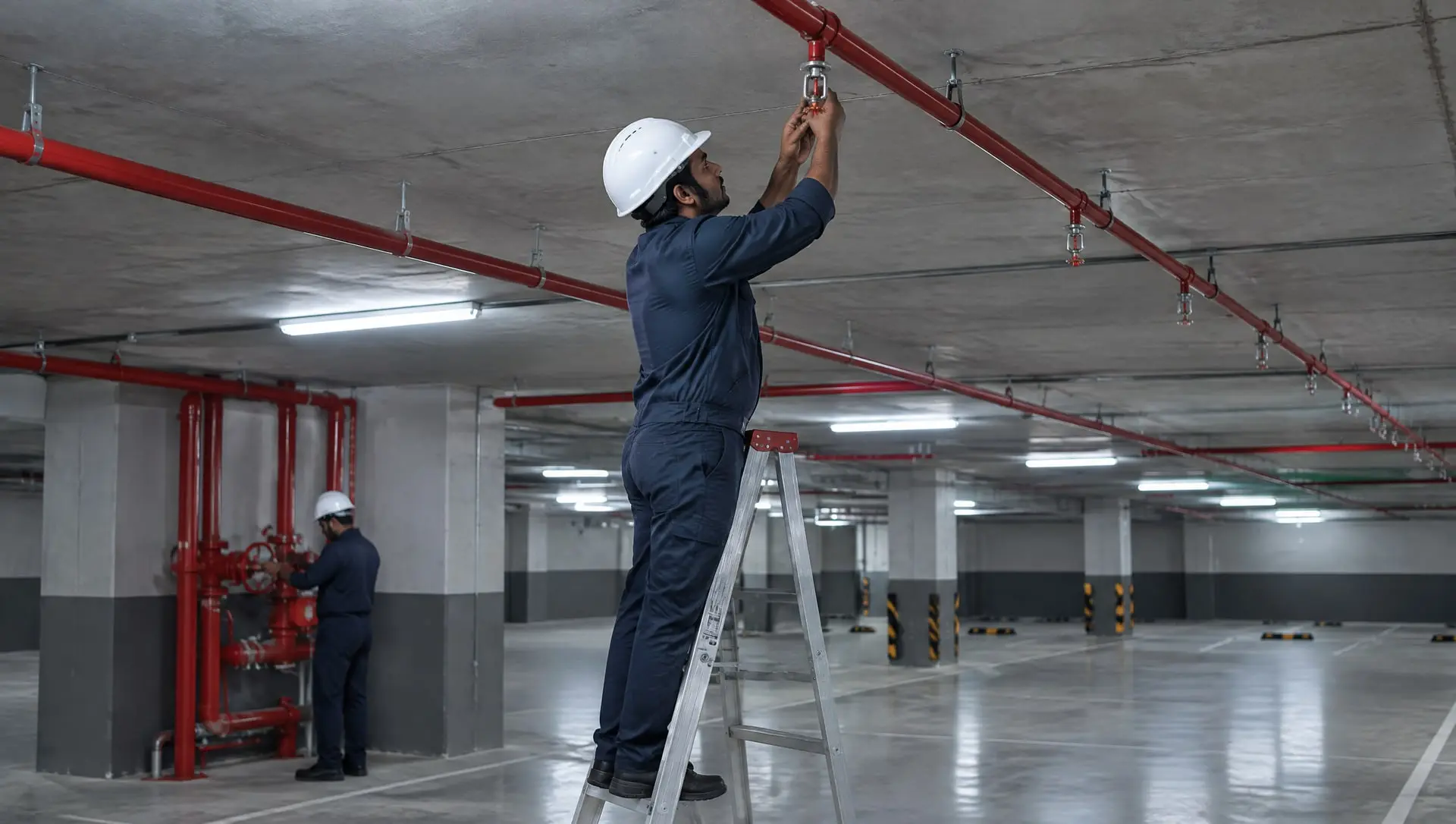
Fire Sprinkler System Installation in Mumbai
Cease Fire & Electrical Services LLP provides fire sprinkler system installation in Mumbai, covering design, hydraulic calculations, supply, installation, testing and maintenance. We design to the National Building Code, NFPA 13 and UL/FM requirements for residential towers, offices, hospitals, factories and warehouses. As a Maharashtra Fire Services Licensed Agency, we issue Form A on completion and Form B under AMC.
How a fire sprinkler system works
A sprinkler system is a network of pipes kept full of water under pressure, with sprinkler heads spaced across the ceiling. Each head has a glass bulb or link that breaks at a set temperature. When a fire heats the head above it, only that head opens and sprays water onto the fire, while the others stay closed. The water flow opens the alarm valve and a flow switch signals the fire alarm panel, so staff know which floor or zone is affected.
Types of sprinkler systems we install
Wet pipe sprinkler system
How it worksPipes are always full of water; each head opens on its own in the heat of a fire
Where it is usedMost buildings: flats, offices, hotels, hospitals, shops and car parks
Drencher system
How it worksOpen nozzles on a deluge valve spray a curtain of water when the detection system triggers it
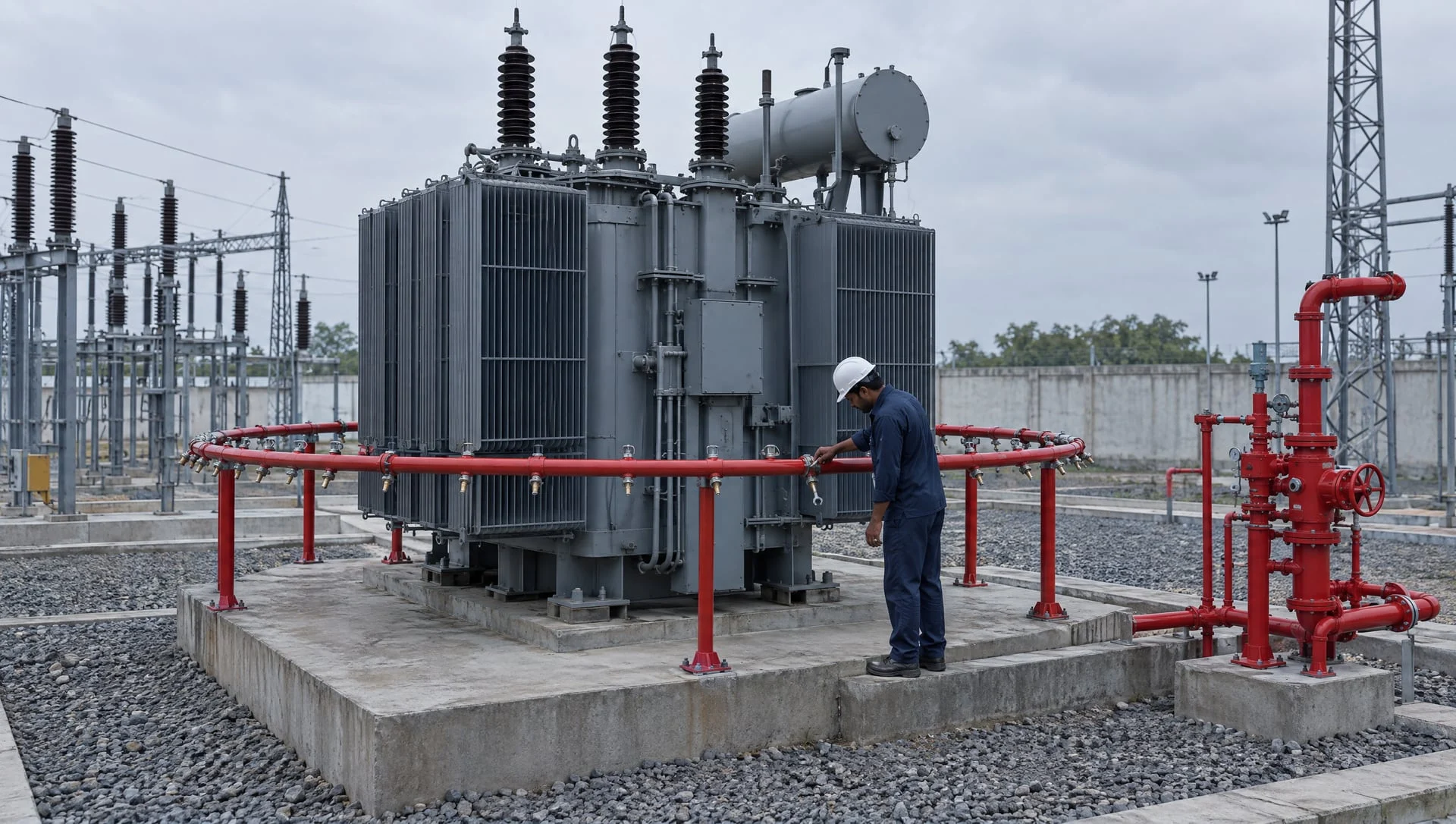
Where it is usedBuilding openings, exposed faces and escalator voids
Storage sprinklers (ESFR)
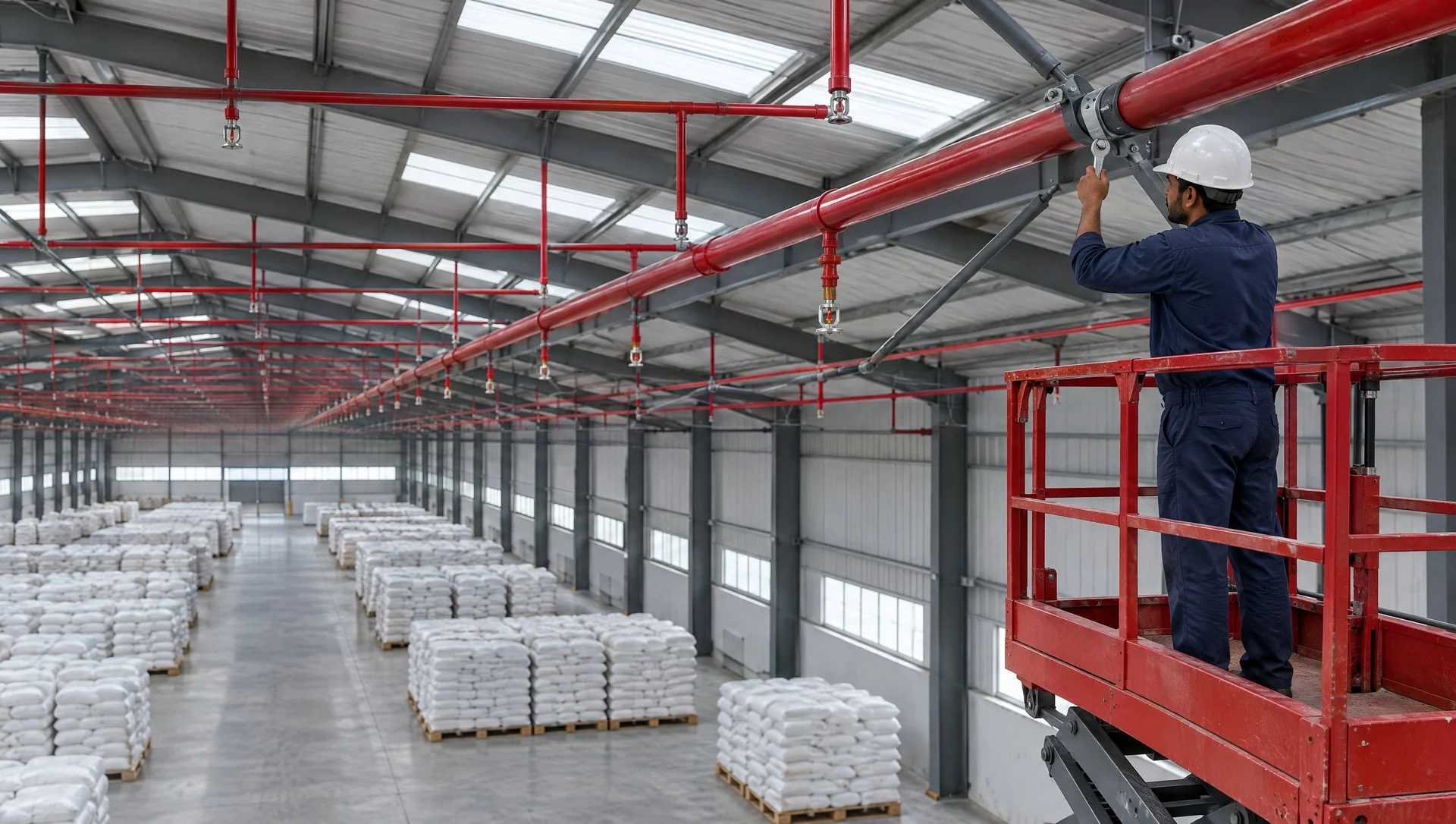
How it worksLarge-orifice, fast-response heads at roof level
Where it is usedWarehouses with high-piled or rack storage
Seismic bracing
How it worksBraces and restraints that hold sprinkler pipes in place during an earthquake
Where it is usedWarehouses and industrial buildings, as on our Roquette India project
Where sprinklers are needed

Residential towers and housing societies
Sprinklers in basements, car parks, lobbies and flats, sharing pumps with the hydrant system

Commercial buildings and offices
Pendent sprinklers in false ceilings, floor-wise flow switches and an annunciator panel
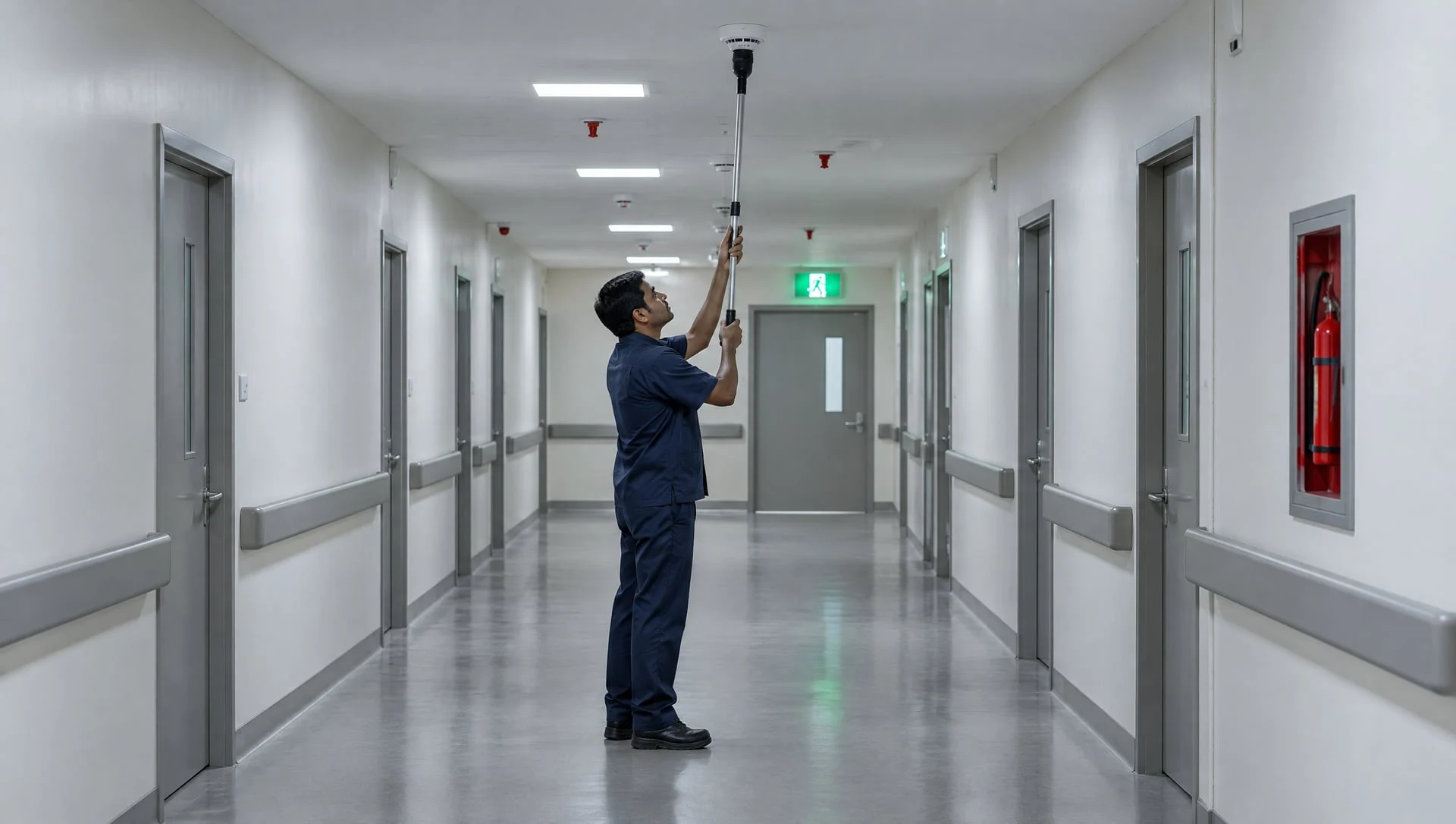
Hospitals, hotels and schools
Full-building coverage linked to the fire alarm system

Factories and warehouses
Roof sprinklers, ESFR heads for rack storage, seismic bracing where needed
Whether sprinklers are required depends on the building's height, use and area under the National Building Code and the fire brigade's requirements. We confirm this during the free site survey.
Components of a sprinkler system
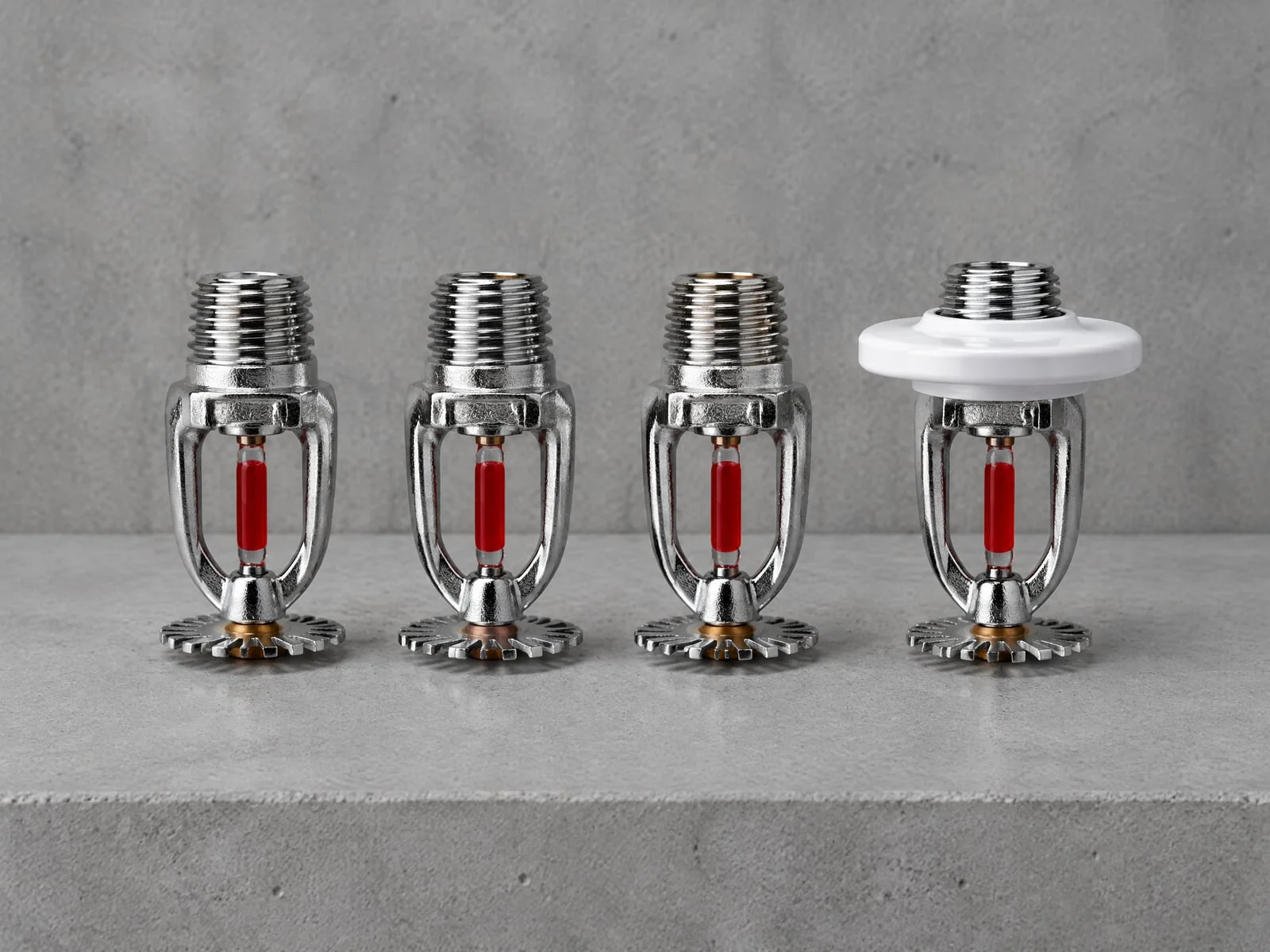
Sprinkler heads (pendent, upright, sidewall, ESFR)
Open in the heat of a fire and spray water over the area below
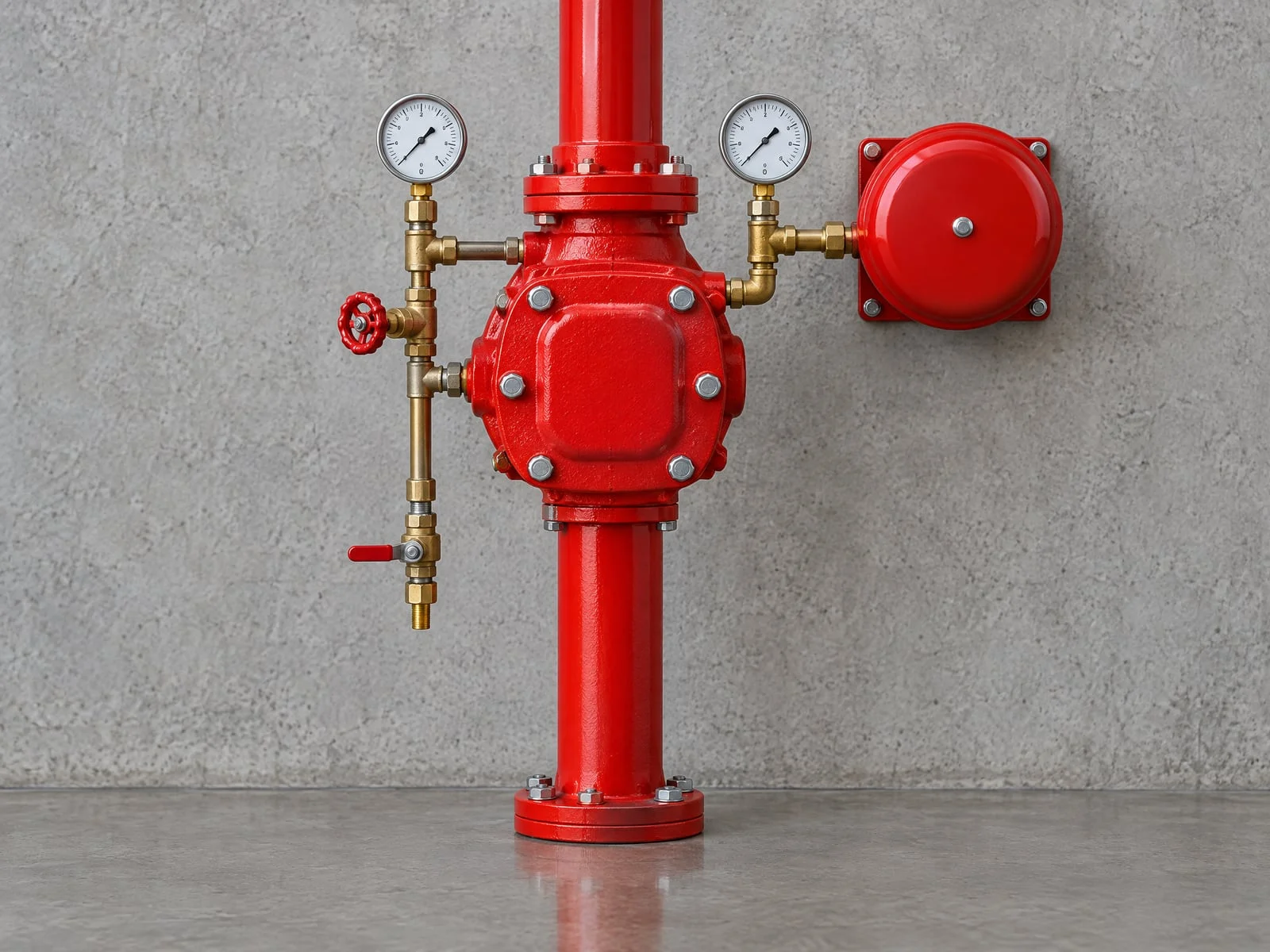
Sprinkler alarm valve
Main control valve; opens when water flows and sounds the alarm
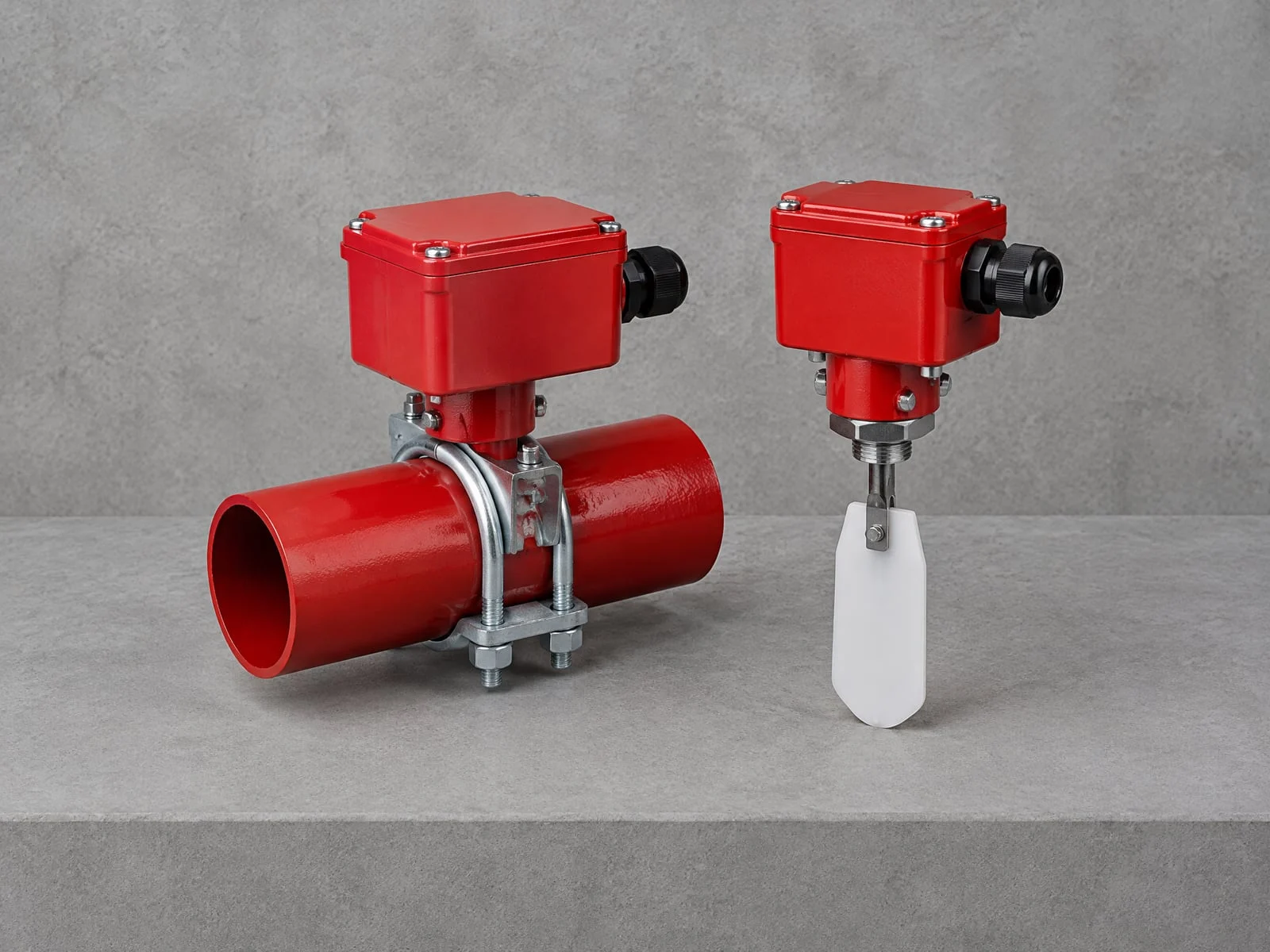
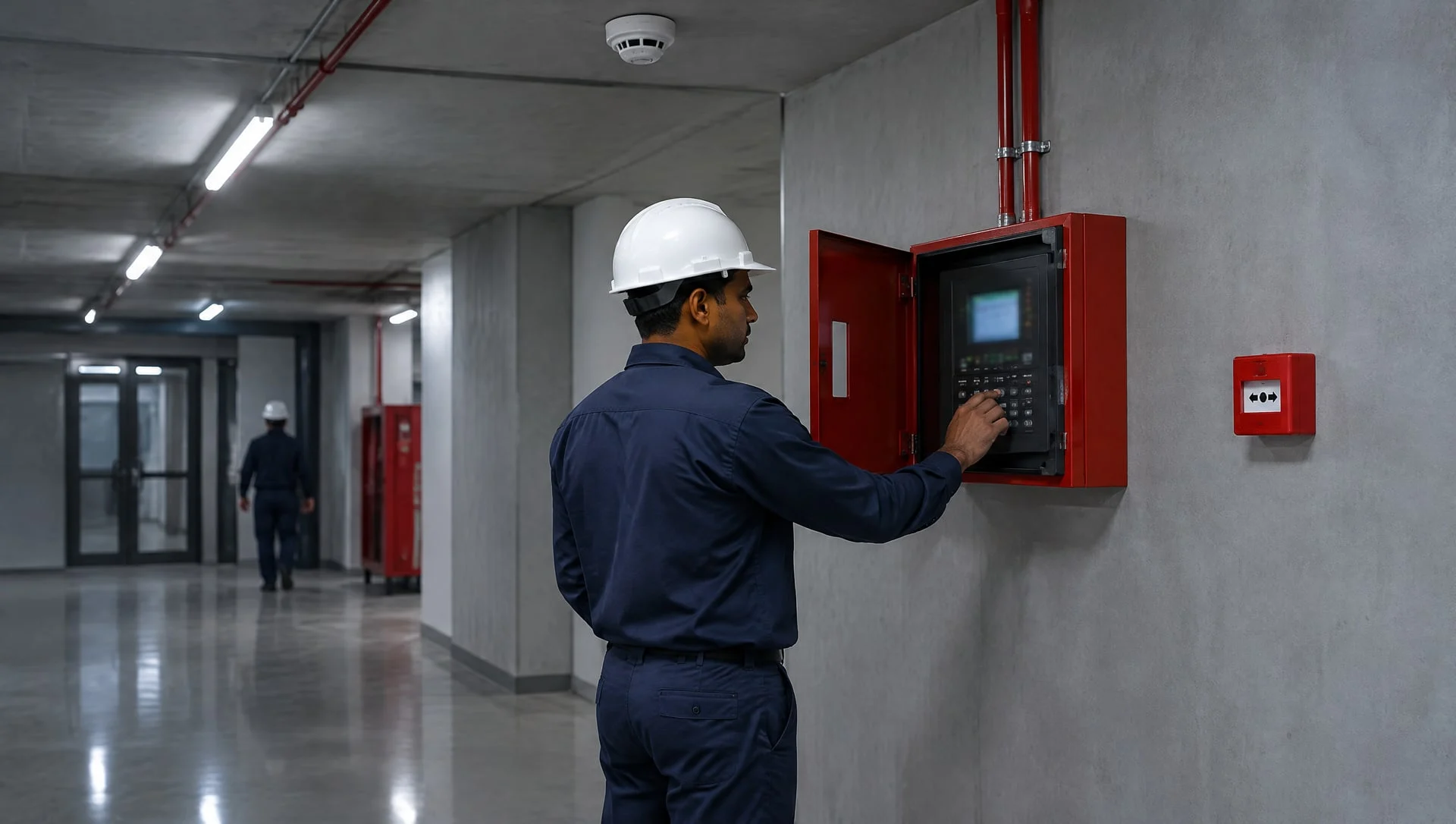
Flow switches and annunciator panel
Show which floor or zone has water flow
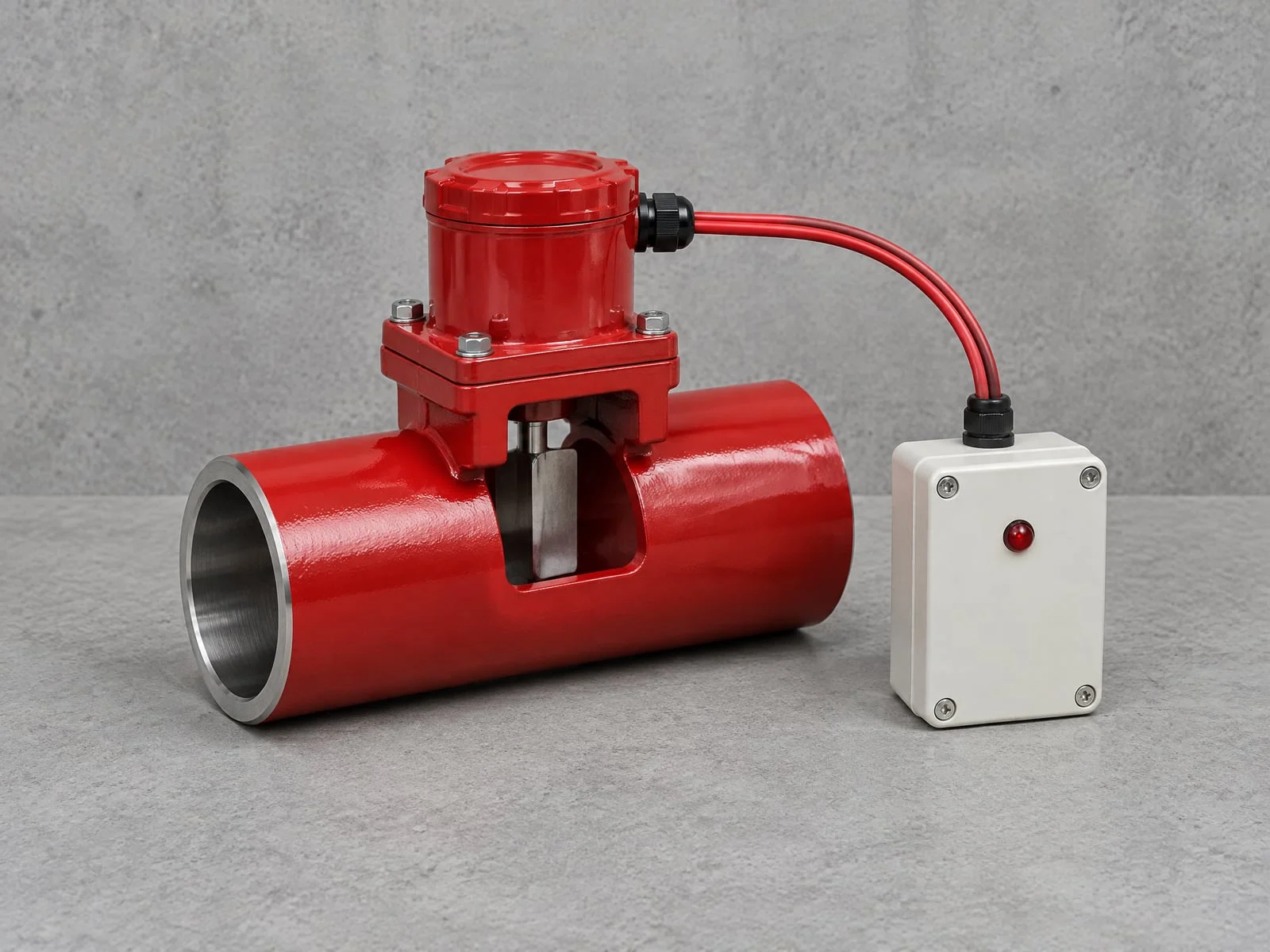
Flow switch control module
Connects each flow switch to an addressable fire alarm panel
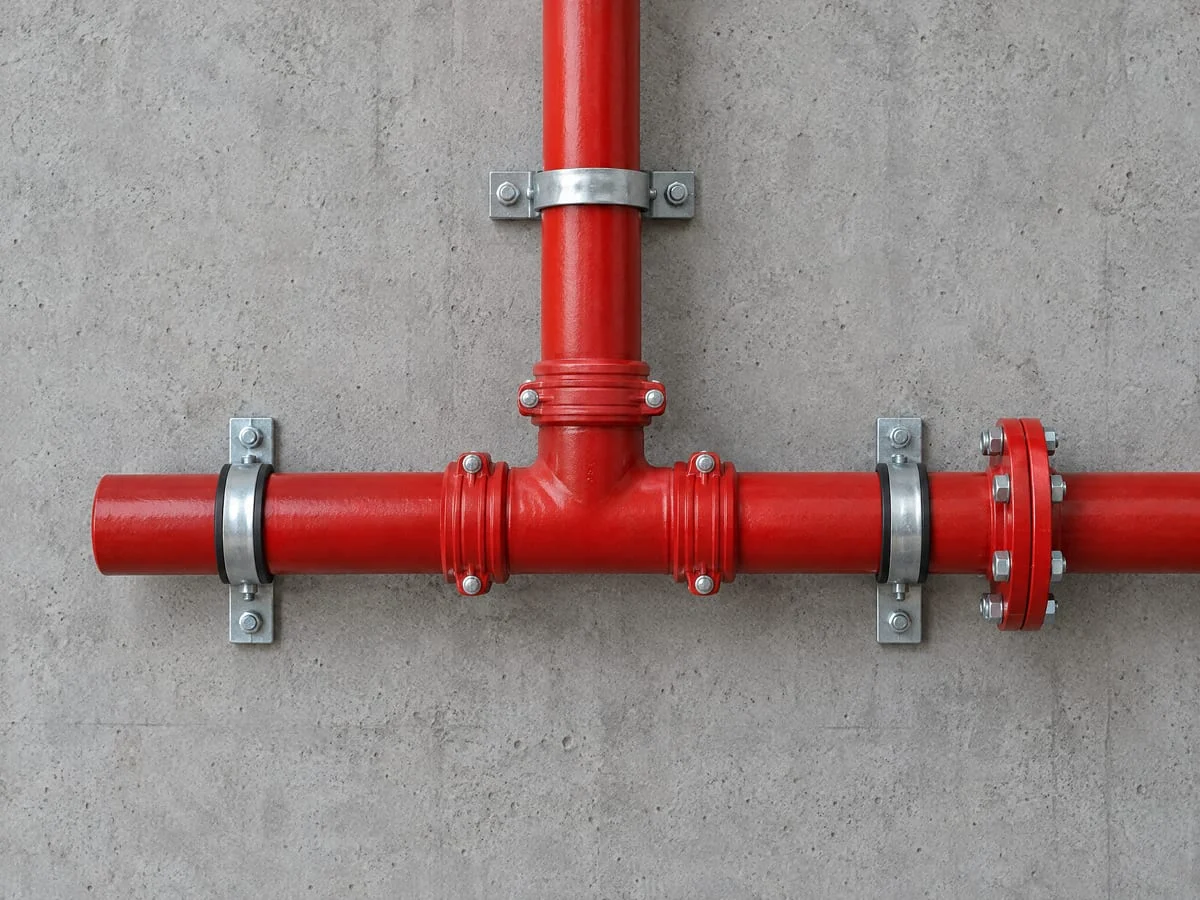
Pipework, hangers and seismic bracing
Carry water to every head and keep the pipes secure
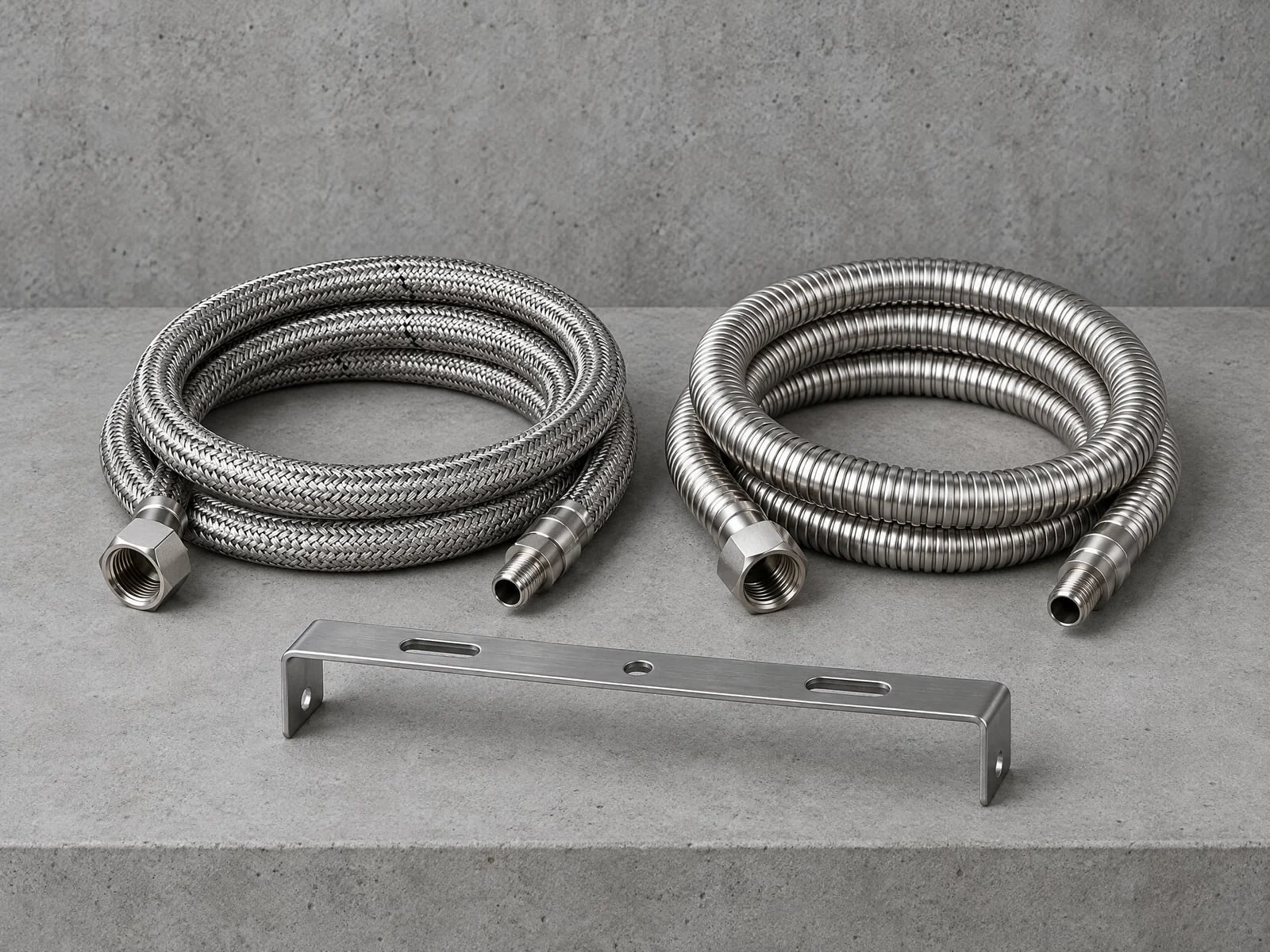
Flexible sprinkler hoses
Connect branch pipes to heads in false ceilings
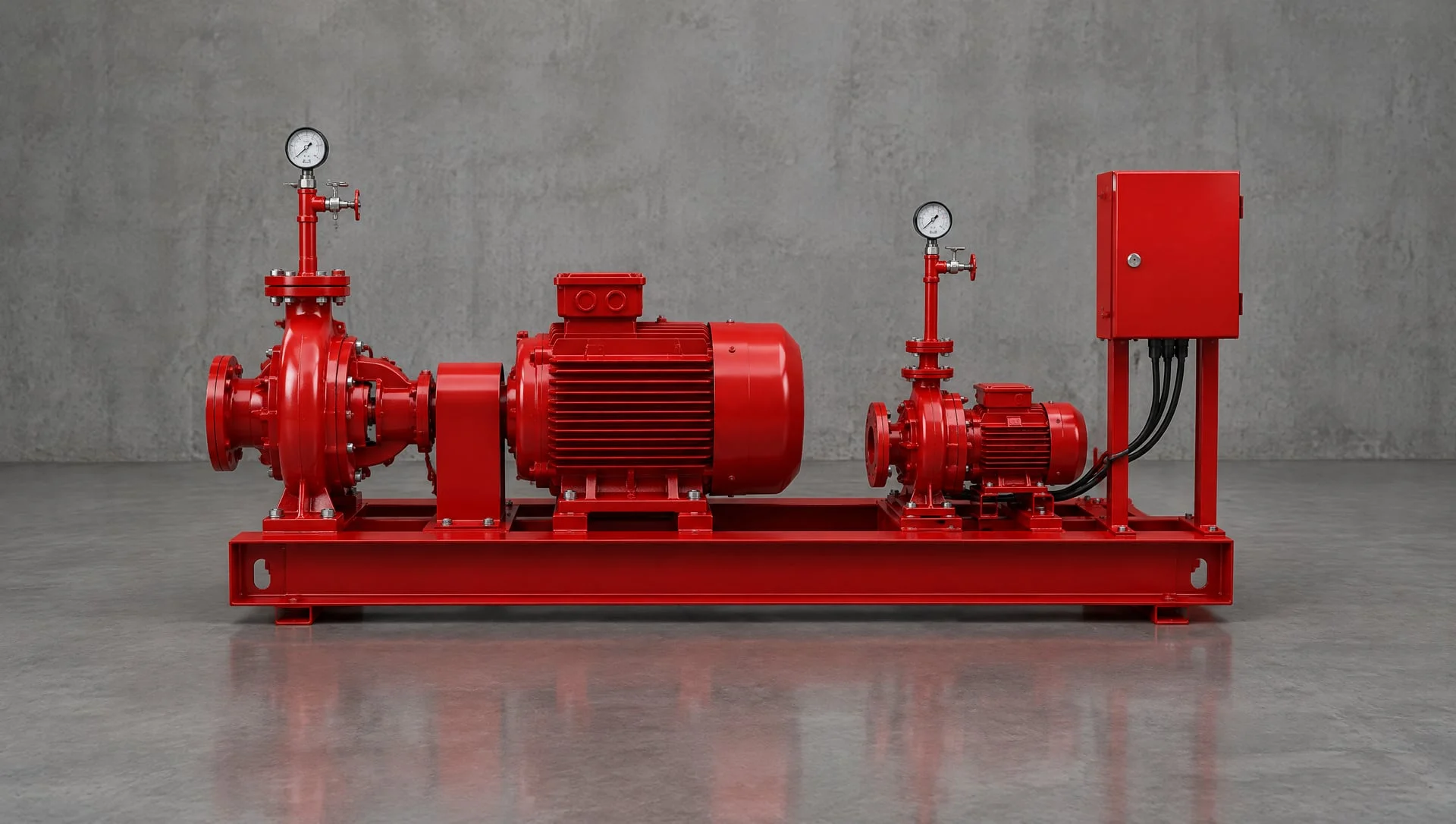
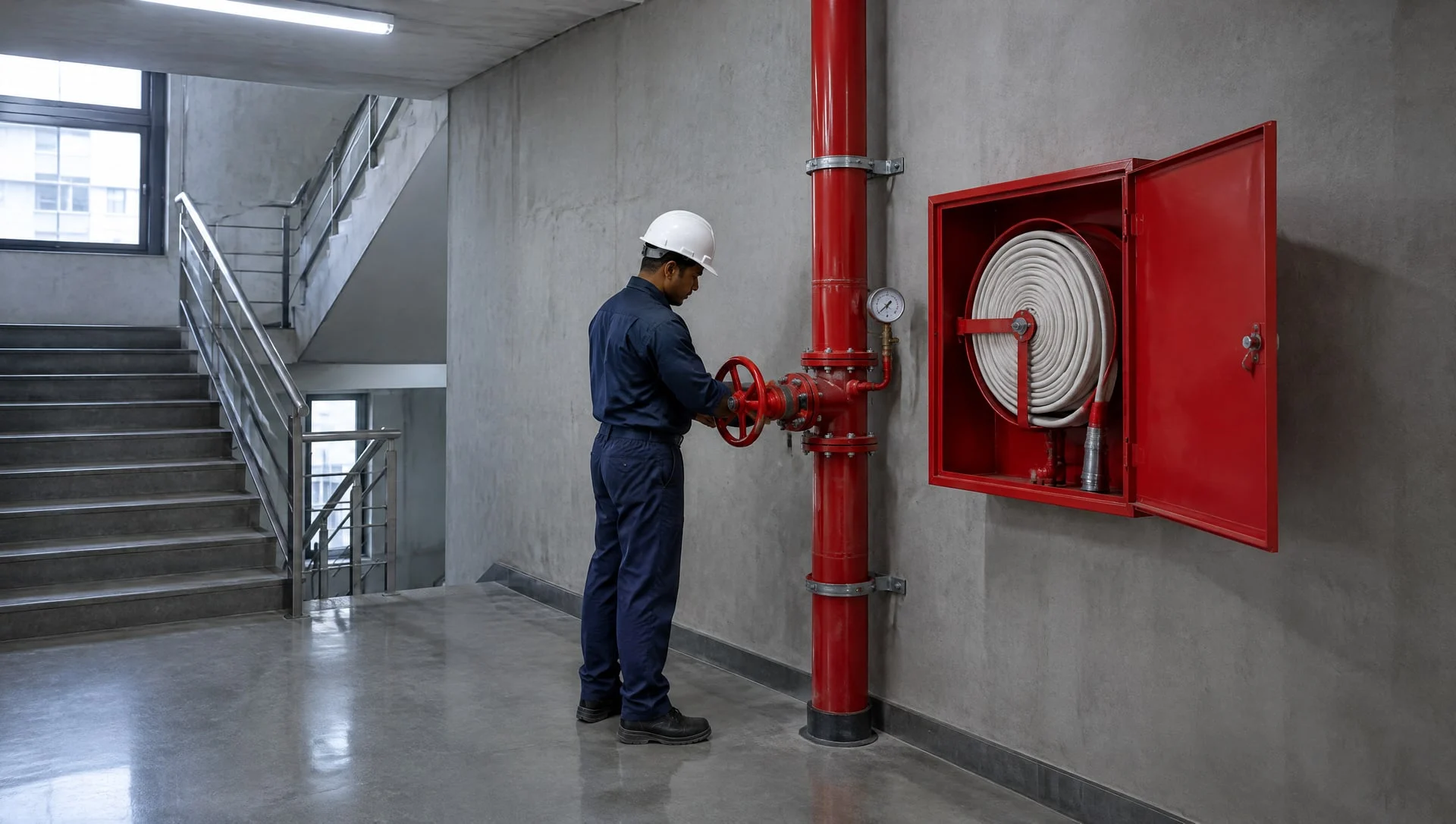
Fire pumps (main, jockey and diesel)
Keep the system pressurised and supply water when heads open
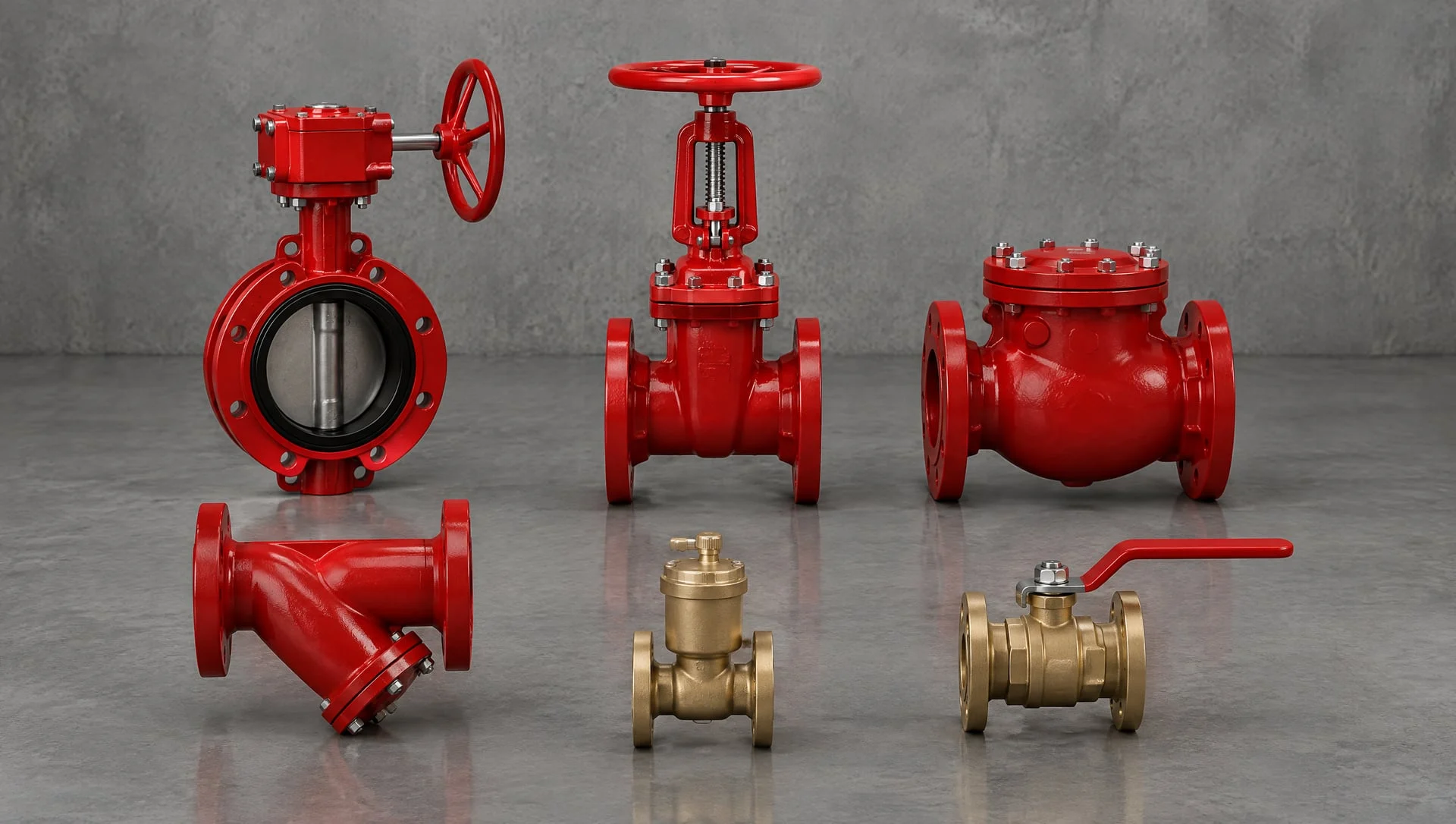
Isolation valves and fire brigade inlet
Isolate zones for maintenance and let the fire brigade boost the supply
We supply the heads, valves, flow switches and pumps ourselves. UL listed and FM approved sprinklers, valves and pumps are available.
Design standards and hydraulic calculations
We design sprinkler systems to the NBC, NFPA 13 and UL/FM requirements. Our engineers choose the head type, temperature rating and spacing for each area, and check pipe sizes and pump duty with SprinkCALC hydraulic calculations, so the system delivers the right flow and pressure at the furthest heads.
Our process
Free site survey
We study the building, ceilings, storage and any existing system.
Design
Head layout, hazard classification, hydraulic calculations and drawings.
Supply and installation
Heads, valves, pipework, bracing and pumps, installed by our own team.
Testing and commissioning
Pressure testing, flow tests at the alarm valve, flow switch and alarm checks, and training for your staff.
Form A
As a licensed agency, we issue Form A for the work, which you submit to the fire brigade.
AMC and Form B
Usually quarterly checks with an annual service, and Form B every January and July.
Monitoring sprinkler and drencher line pressure
Under the Maharashtra ACMS rules of 12 June 2025, covered buildings must monitor riser pressure as well as pumps. Our FireSense IoT panel reads sprinkler and drencher riser pressure and raises an alert when it falls below 5 bar, along with pump status, tank levels and the fire alarm panel. A slow leak or a closed valve then shows up on the owner's phone and ours, and not at the next inspection. See the ACMS guide for Form A-1 and Form B-1.
Sprinkler projects
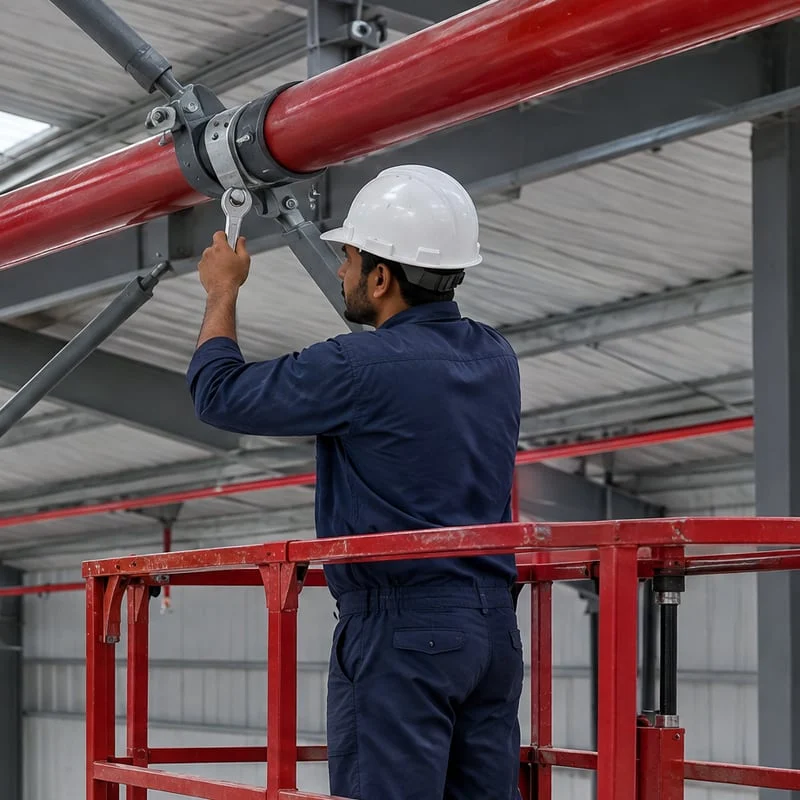

Roquette India, Pantnagar
Roof sprinklers, seismic bracing and fire alarm systems to FM guidelines for four godowns, January 2023 to February 2024, certified complete by the client.
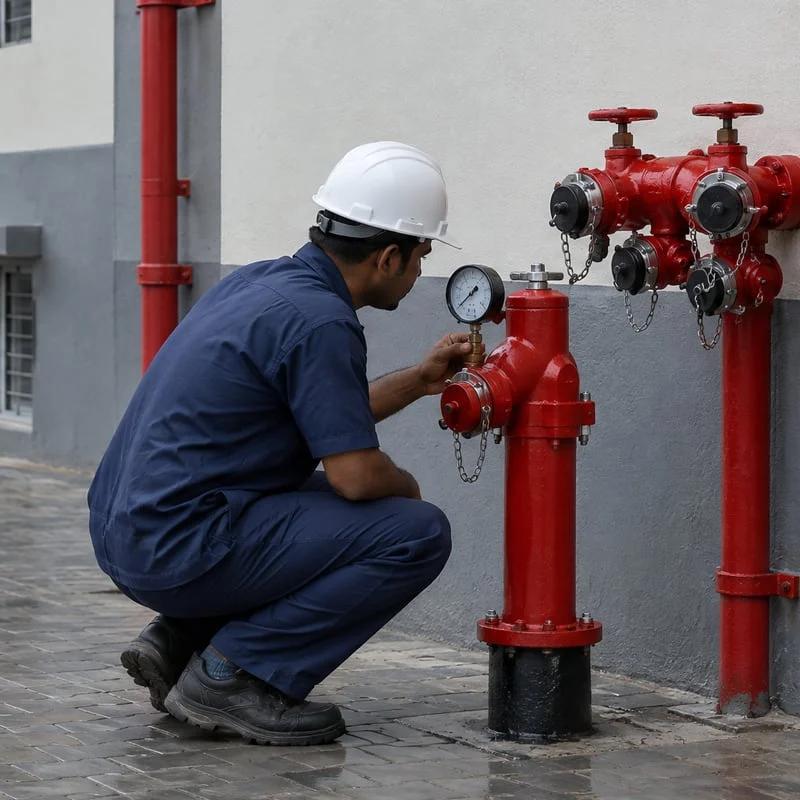

LBS IMU Mumbai Port Campus (CPWD), Sewri
Fire fighting and sprinkler systems for a G + 11 hostel.

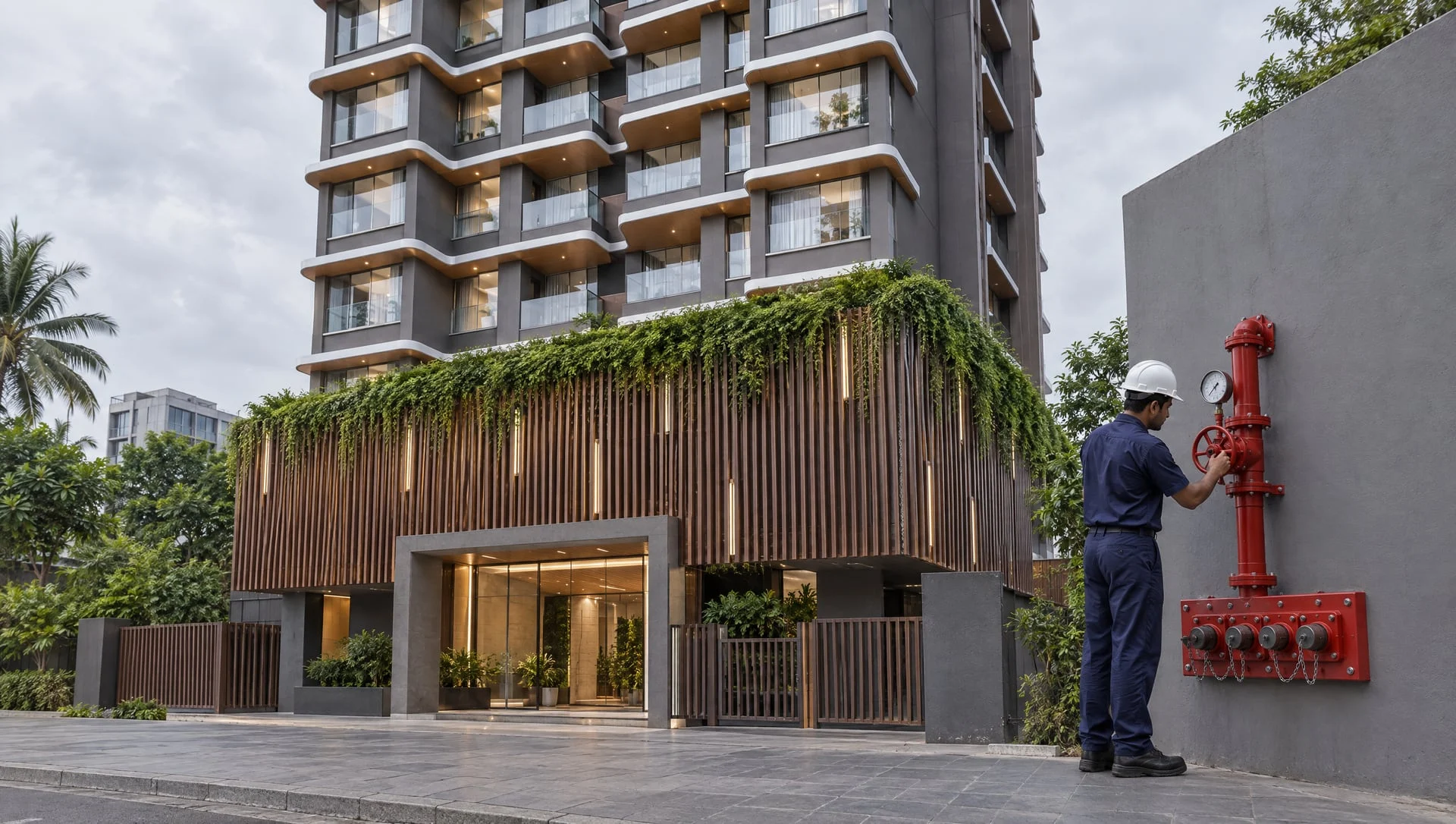
Palkhi Roha, Kandivali East (G + 14)
Fire fighting, sprinkler, fire detection and signage systems, completed in April 2024.
Palkhi MRDA, Kandivali (G + podium + 13), for KCD Realty
The same complete package.
Maintenance and Form B
On each service visit we check the sprinkler alarm valves, sprinkler heads, flow switches, valves and fire pumps. Painted, damaged or corroded heads are replaced with heads of the same type, temperature rating and K-factor. A licensed agency must inspect the system and issue Form B every January and July, and we can include this in your AMC.
Why choose Cease Fire
Since 1992
1,500+ projects and the Rashtriya Nirman Ratna Award for Best Government Contractor (2002).
Licensed
Maharashtra Fire Services Licensed Agency (MFS/
LA/ ), issuing Form A and Form B.RF-93/ RD-95 Engineered, not guessed
In-house design with SprinkCALC hydraulic calculations and seismic bracing where needed.
Industrial experience
Warehouse roof sprinklers to FM guidelines for Roquette India.
One team
Design, products, installation, testing and AMC from one company.


Book a free site survey
Send your drawings, building type and location. We will survey the site, confirm the sprinkler requirement and send a clear proposal.
Frequently asked questions
How does a fire sprinkler system work?
Each sprinkler head has a heat-sensitive bulb or link. When a fire heats a head to its set temperature, that head opens and sprays water, and the water flow raises an alarm.
Do all sprinklers go off at once in a fire?
No. In a standard wet pipe system, only the heads heated by the fire open. All nozzles open together only in deluge-type systems, such as drenchers, which are triggered by a detection system.
Which buildings need a sprinkler system?
It depends on the building's height, use and floor area under the National Building Code and the fire brigade's requirements. We confirm what your building needs during a free site survey.
What standards do you design sprinkler systems to?
We design to the National Building Code, NFPA 13 and UL/FM requirements, and check every design with hydraulic calculations.
What is a sprinkler hydraulic calculation?
It is a calculation that checks the pipes and pumps can deliver enough water at the right pressure to the furthest sprinkler heads. We carry these out using SprinkCALC.
Can sprinklers be added to an existing building?
Yes. We survey the building, design around the existing structure and services, and extend or modify the pipework and pumps as needed.
What is seismic bracing for sprinkler pipes?
Seismic bracing uses braces and restraints to stop sprinkler pipes swinging or breaking in an earthquake. We installed it with roof sprinklers for Roquette India's warehouses.
How often should a sprinkler system be inspected?
Most sites have quarterly checks and an annual service under AMC, plus the Form B inspection by a licensed agency every January and July.
Can sprinkler line pressure be monitored remotely?
Yes. FireSense IoT monitoring reads riser pressure and raises an alert below 5 bar, which is part of the ACMS now required for covered buildings in Maharashtra.
Question not answered here? Call our team, Monday to Saturday, 9 am to 7 pm.
Call +91 9920676281